




)
-funktioniert-einwandfrei)
-no-2369-(kondens))
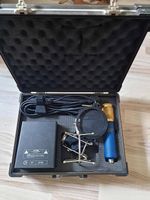
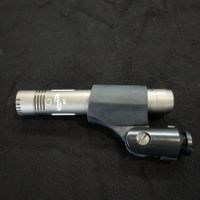
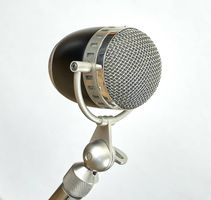
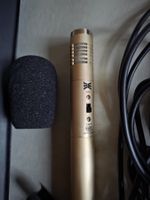
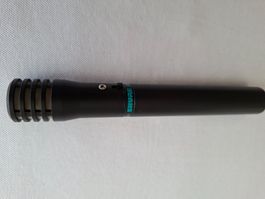
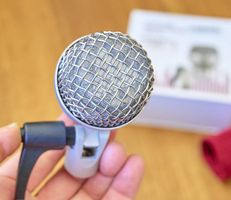
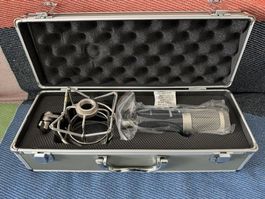
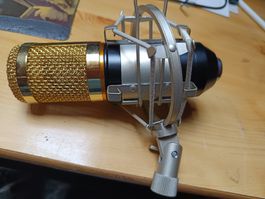

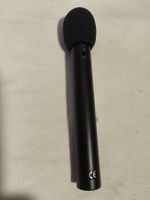
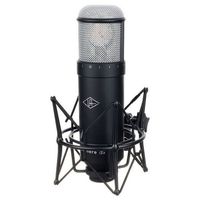
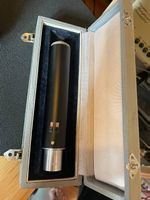

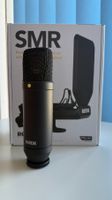
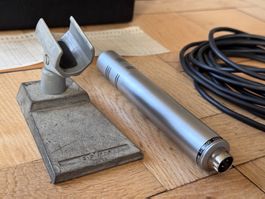
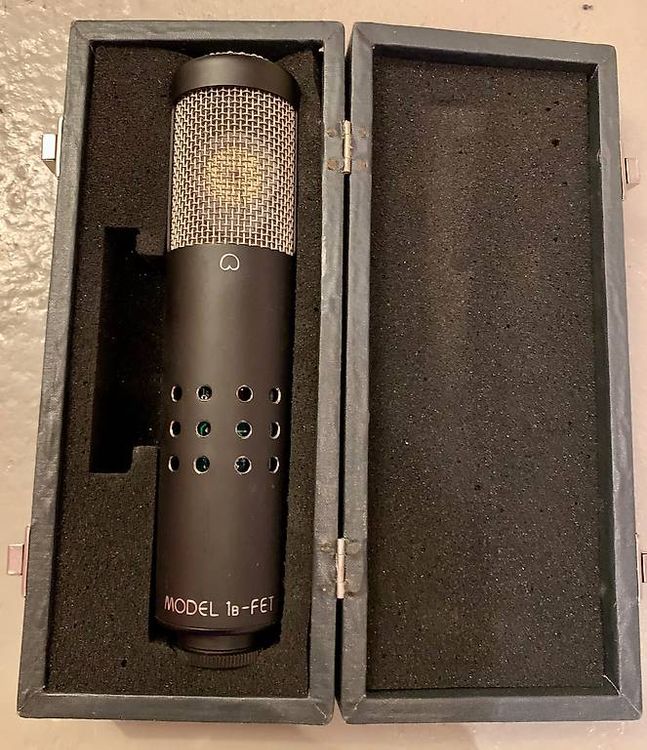
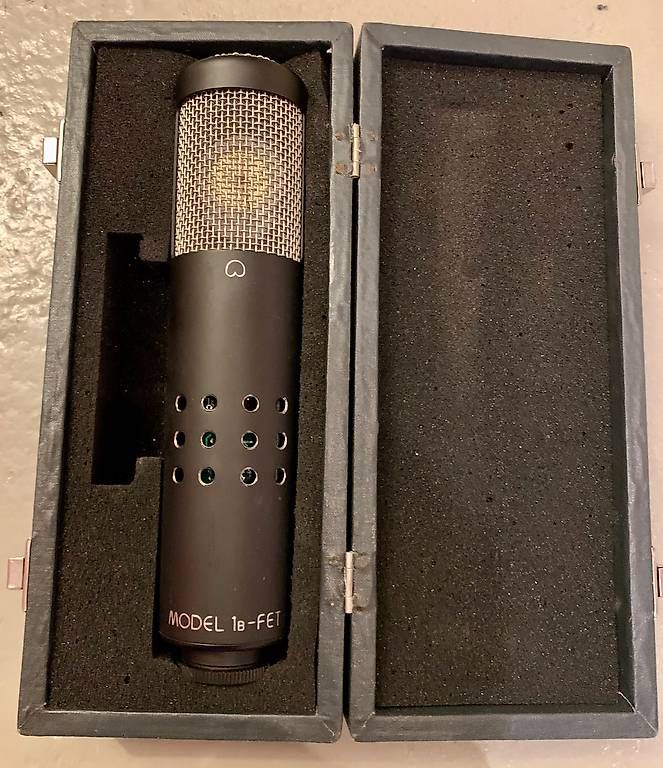
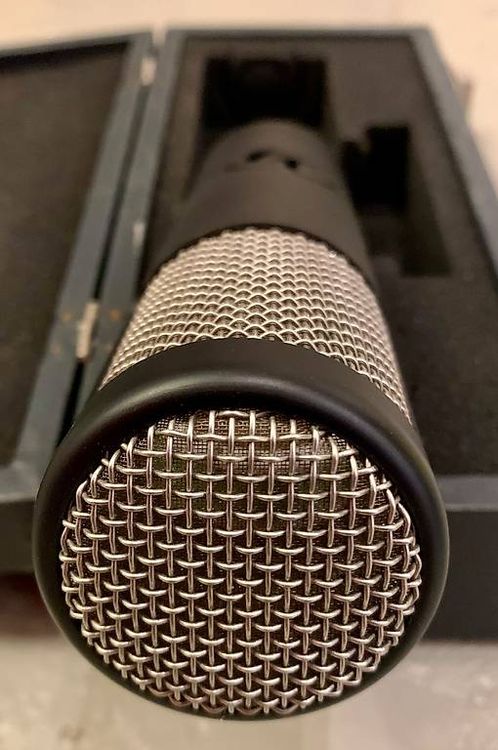
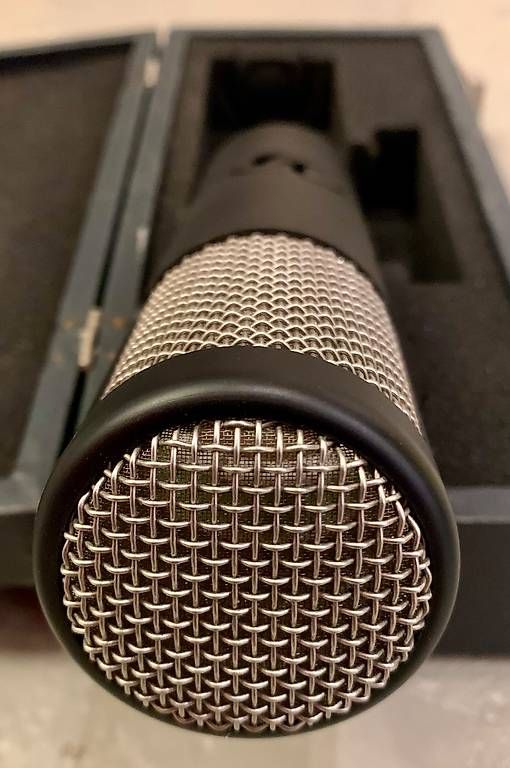
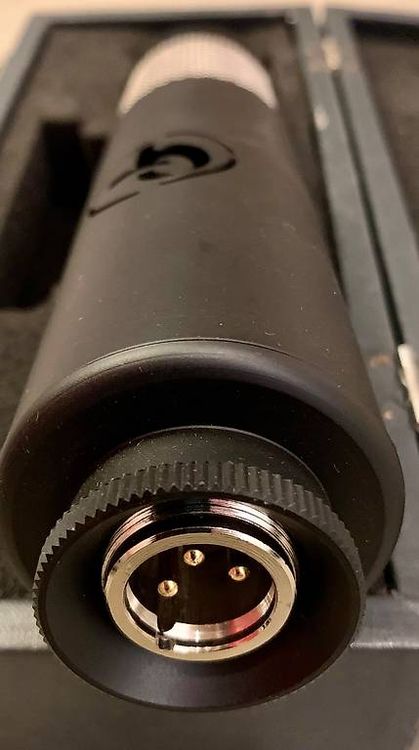
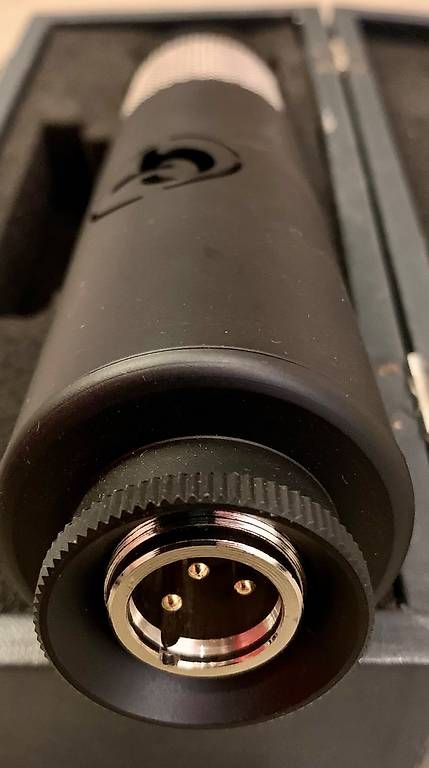
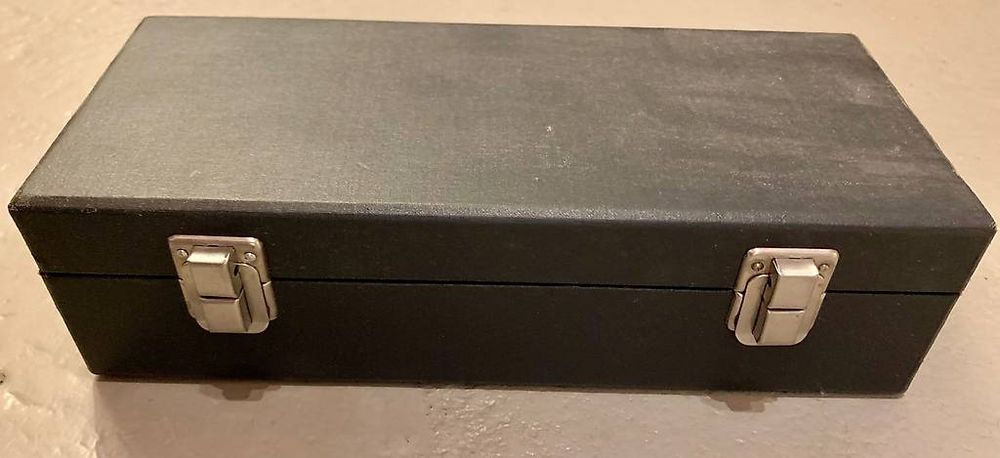
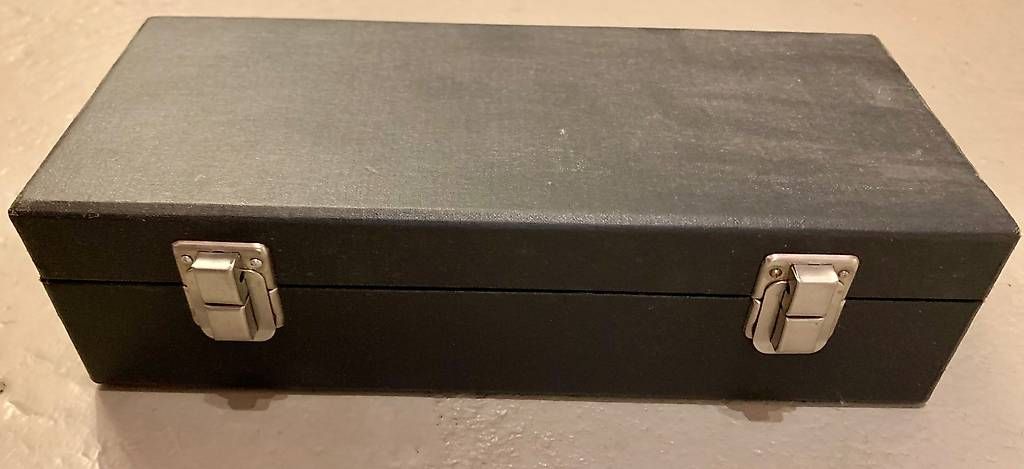
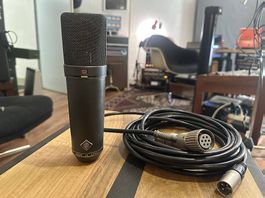
Sehr schön und ausgewogen klingendes Kondensator-Mic. Sehr flexibel (vocals, overheads, acoustic guitar, e-guit, ).
Habe 2 Stück davon (je 100.-) zu vergeben.
Diese Review habe ich auf Sound on Sound gesehen:
The original Model 1 valve mic has been completely reworked and has been reissued as the MD1b Vacuum Tube. However, its solid-state sibling is the MD1b FET. Both mics share exactly the same capsule, output transformer, and mechanical construction (albeit with different finishes), but the FET version employs a Class-A FET-based impedance converter and preamp in place of the original valve. The review model was supplied as part of a pair (serial numbers 302023 and 302024), each mic shipped in its own cardboard protection case and the two kept together by an overall sleeve. Inside each foam-lined cardboard shipping box is a fabric-covered, foam-lined wooden box which contains the microphone, standmount bracket (complete with an adaptor for converting from 3/8-inch to 5/8-inch threads), warranty card, and handbook. The latter Choosing & Using Microphones is well written, with good background technical information and practical mic-placement advice, but offers little specific information on the MD1b FET, and there are no quality-control test plots or even specifications included at all.
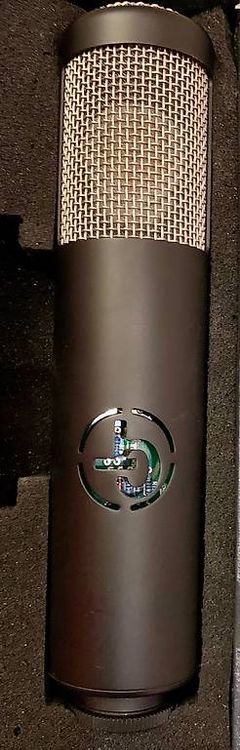
The microphone is housed in a cylindrical metal case, measuring 191mm long (7.5 inches) and 50mm (just under 2 inches) in diameter. It weighs roughly 1400g, and the steel case is painted matt black (the valve original is silver), with a dual-layer wire-mesh grille over the top and on the front and rear faces around the capsule. The case is held in place by two screws at the base, and has various holes, cutouts, and etched markings on it.
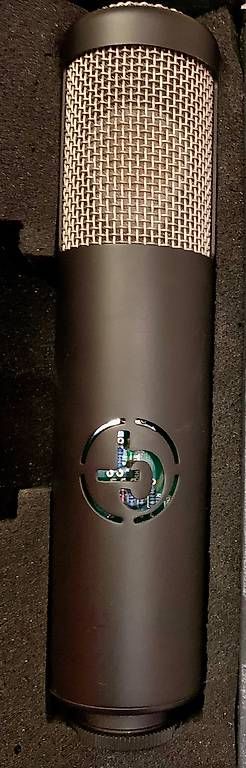
The forward axis of the cardioid pattern is identified by the etched model name at the bottom and a cardioid graphic at the top of the case front, along with a grid of twelve holes. These were intended to allow the user to view the valve inside the sibling Model 1B tube mic (as well as help to promote a cooling airflow), but serve no real purpose here. The rear side of the mic's case features an inverted cutout Groove Tubes logo designed to look right when the microphone is suspended upside down. The mic's serial number is not visible externally it is printed on a label glued to the output transformer, and can only be seen after removing the microphone's outer case.


