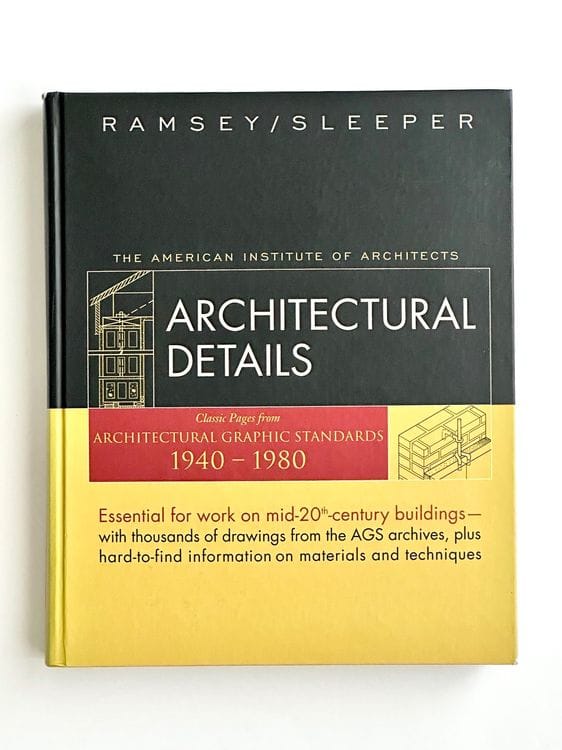
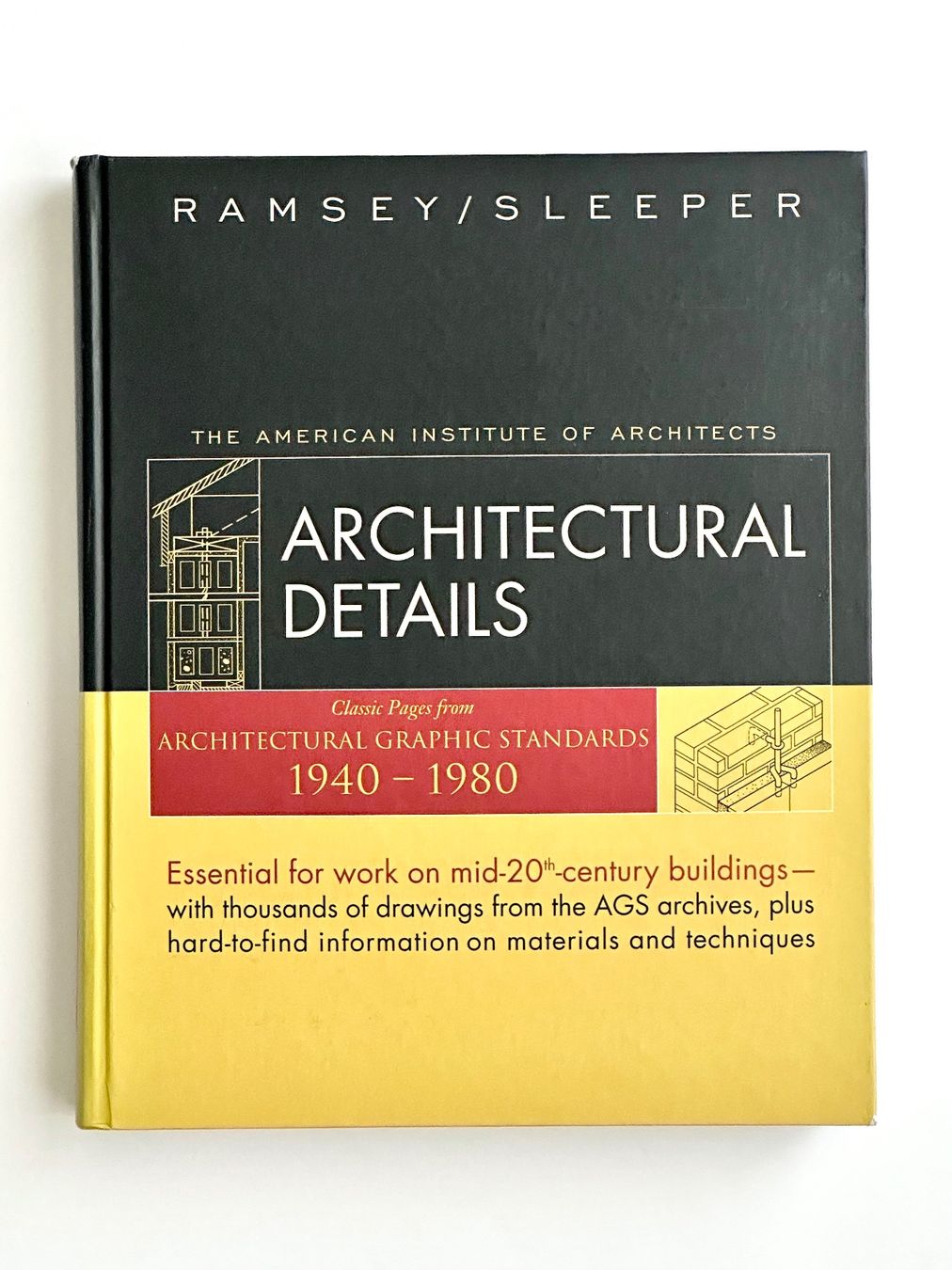
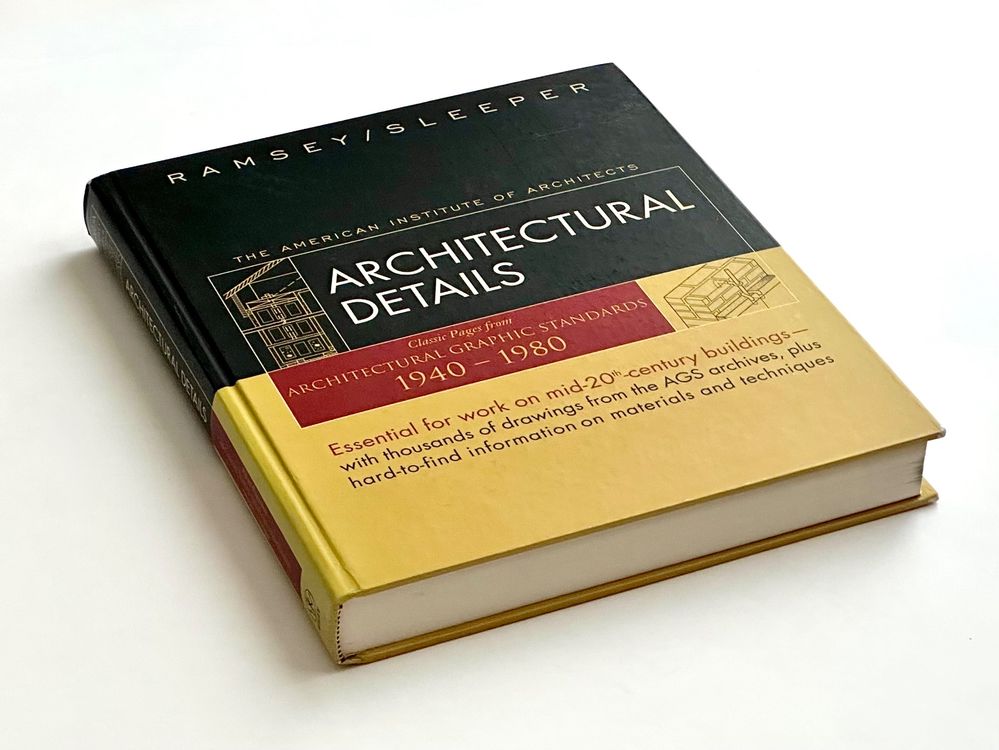
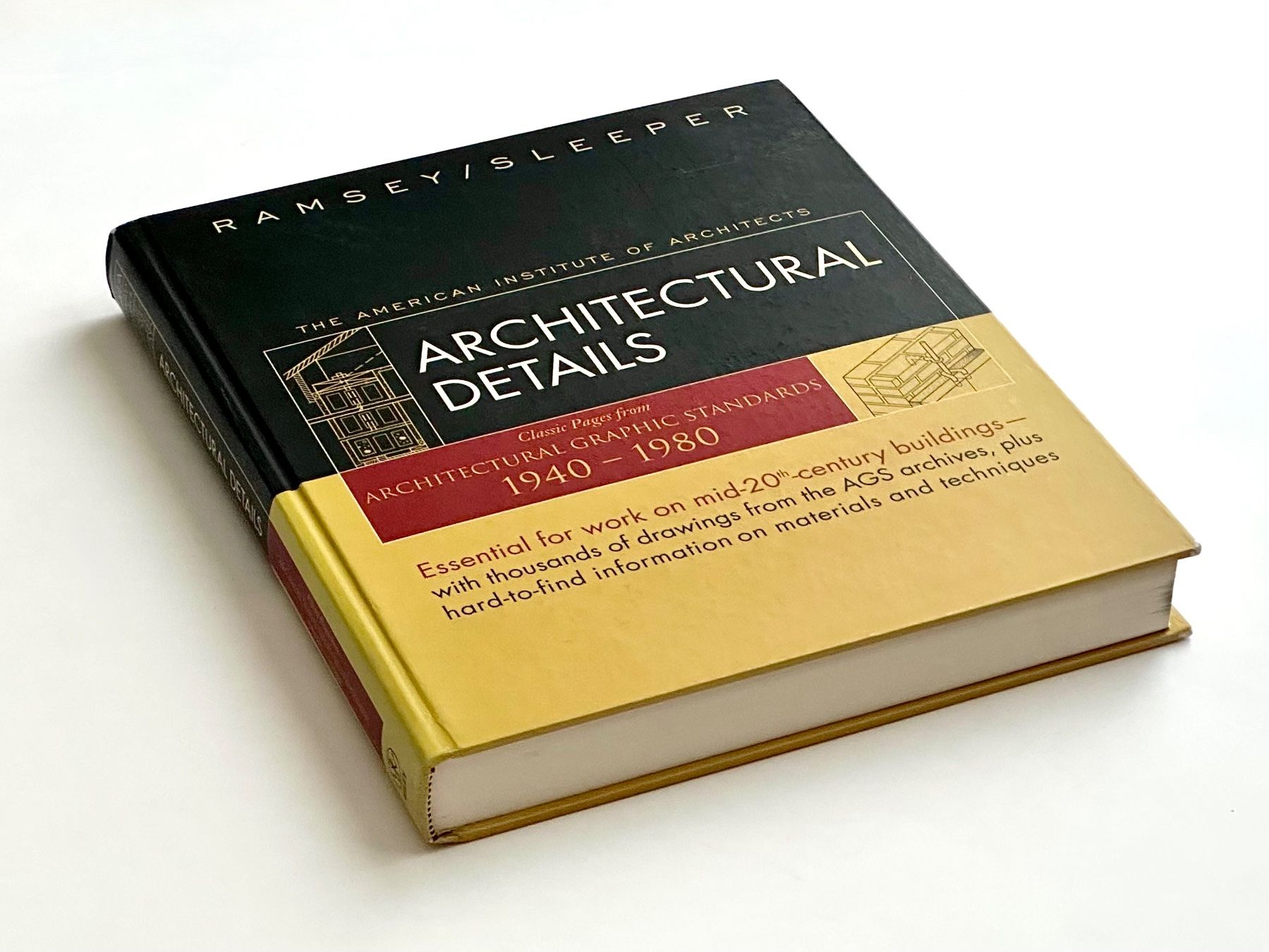
Architectural Details
Classic Pages from Architectural Graphic Standards 1940 - 1980
Charles George Ramsey, Harold Reeve Sleeper
Published by Wiley & Sons, Incorporated, 2001
ISBN: 0-471-41270-8
Format: ca. 29,5 × 24,2 × 3,4 cm
Umfang: 408 Seiten
Einband: Hardcover
Sprache: Englisch
Zustand: Sehr gut erhaltenes Exemplar mit geringfügigen Gebrauchsspuren. Kleine Randläsur am oberen Buchrückenrand. Buchblock sauber, keine Markierungen oder Inschriften.
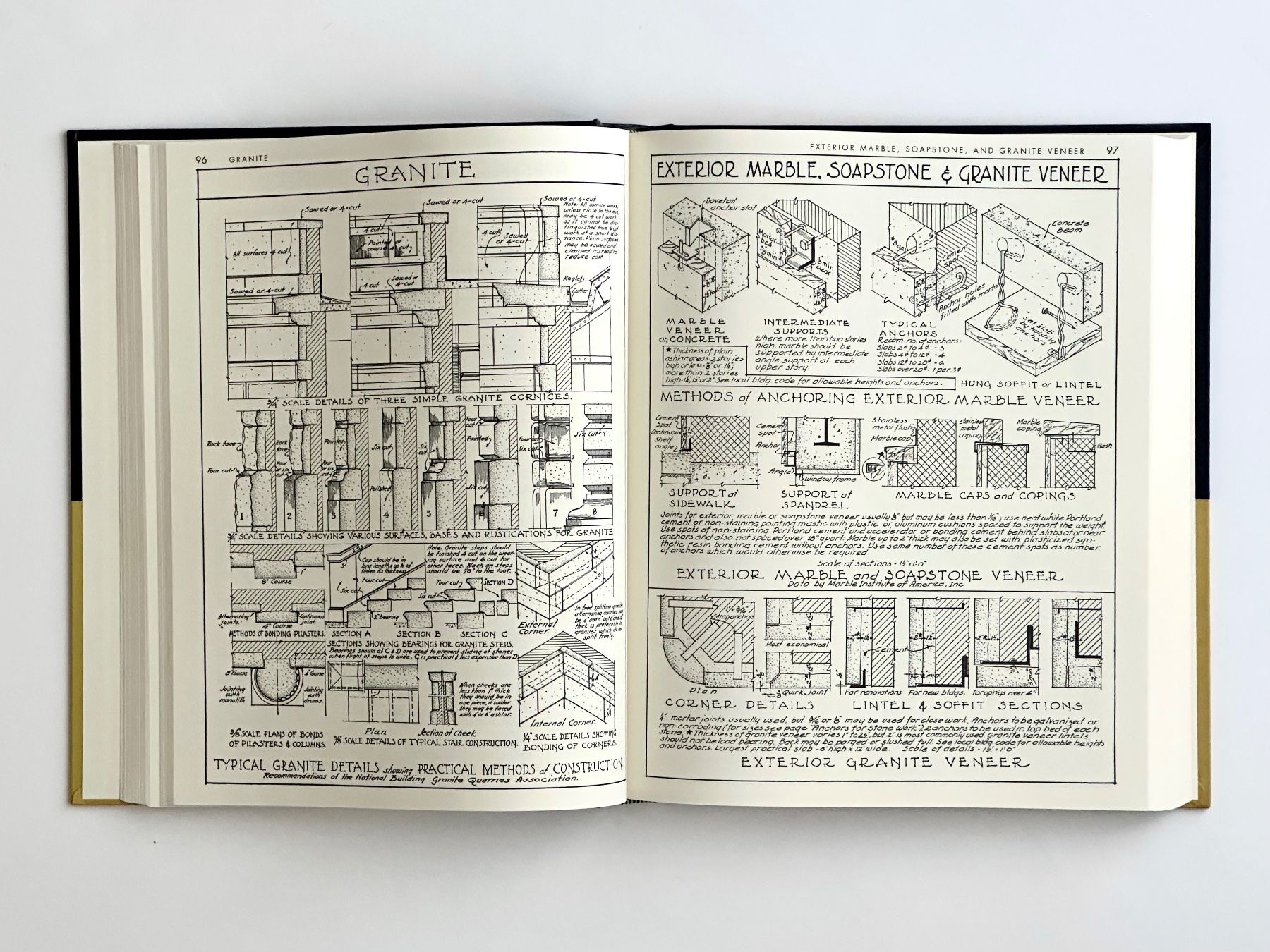
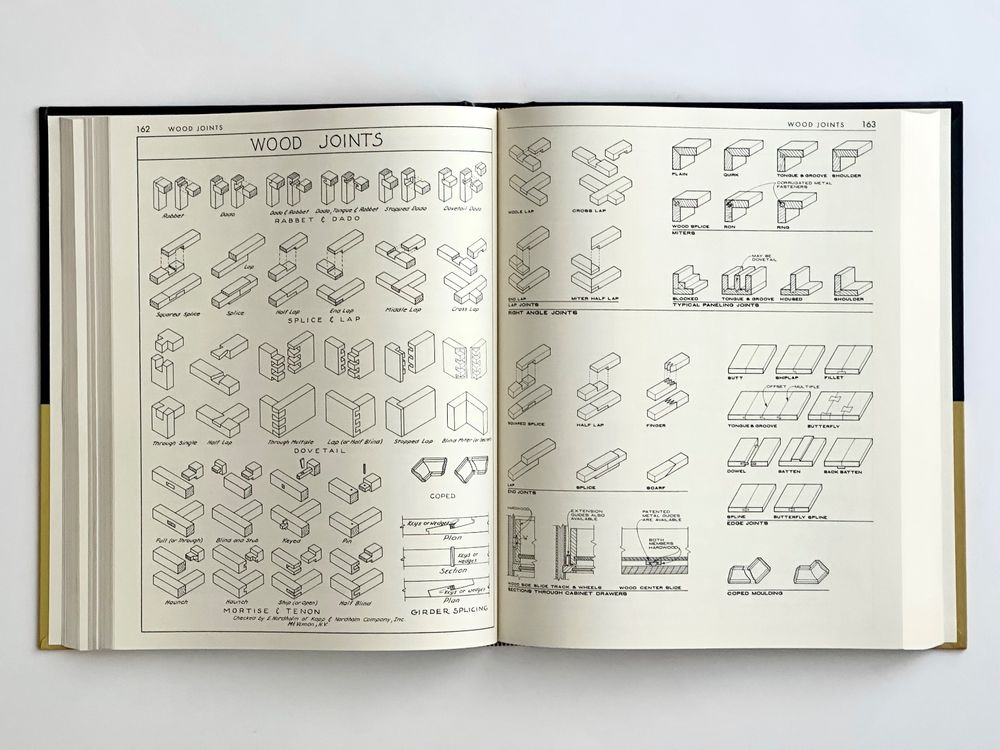
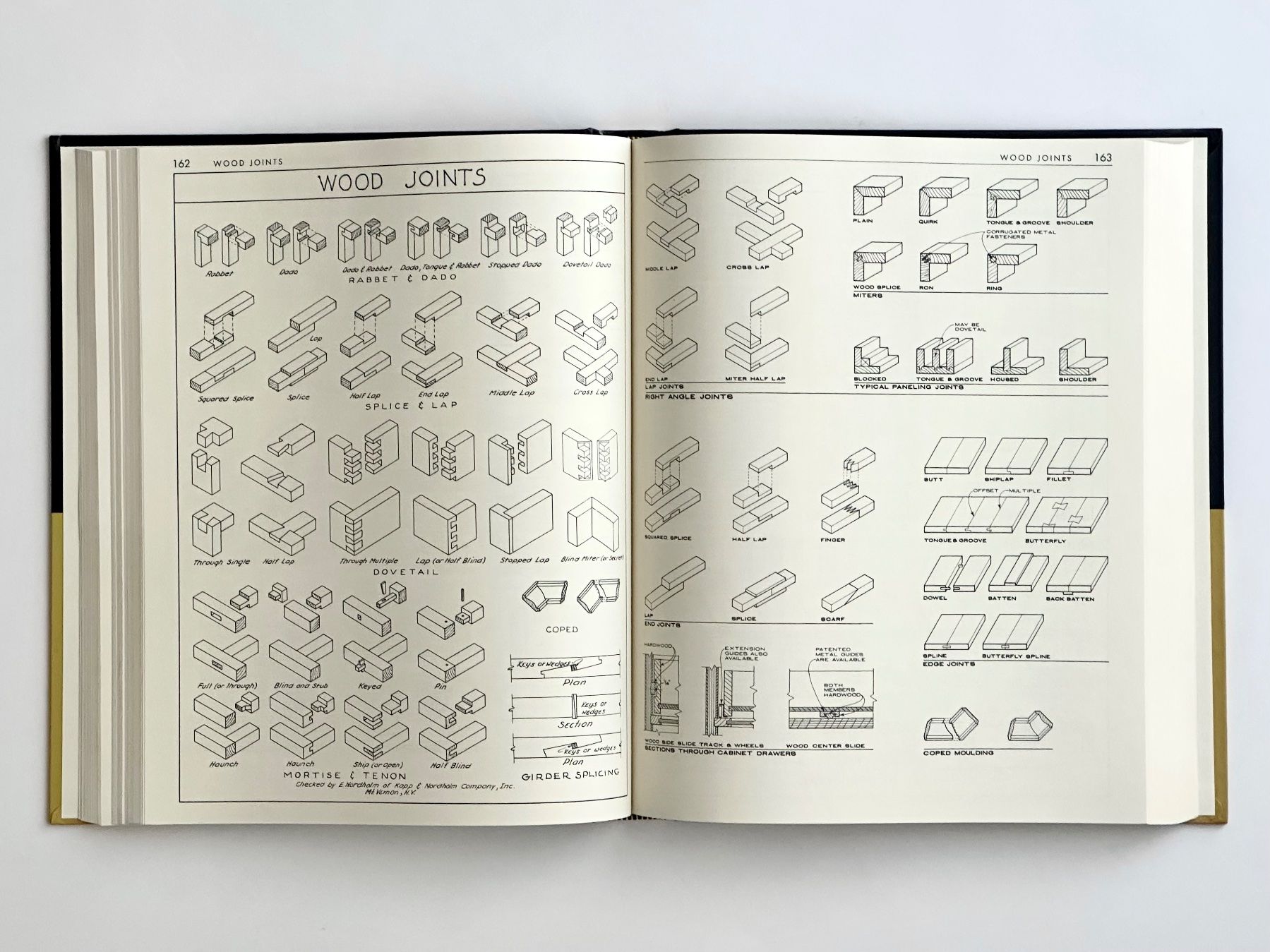
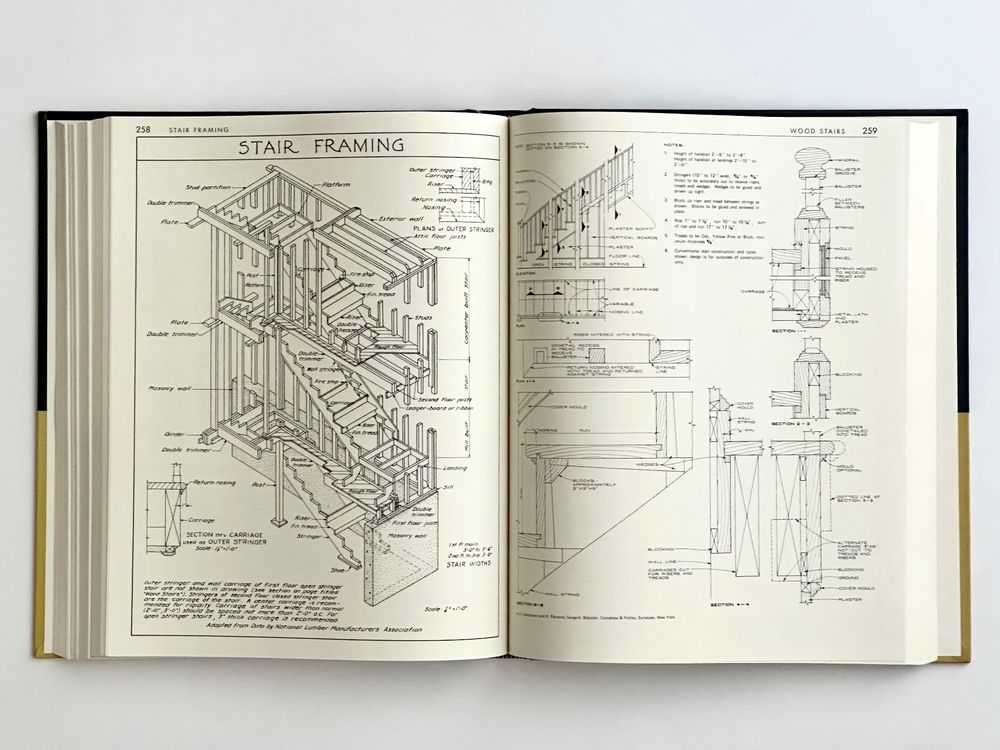
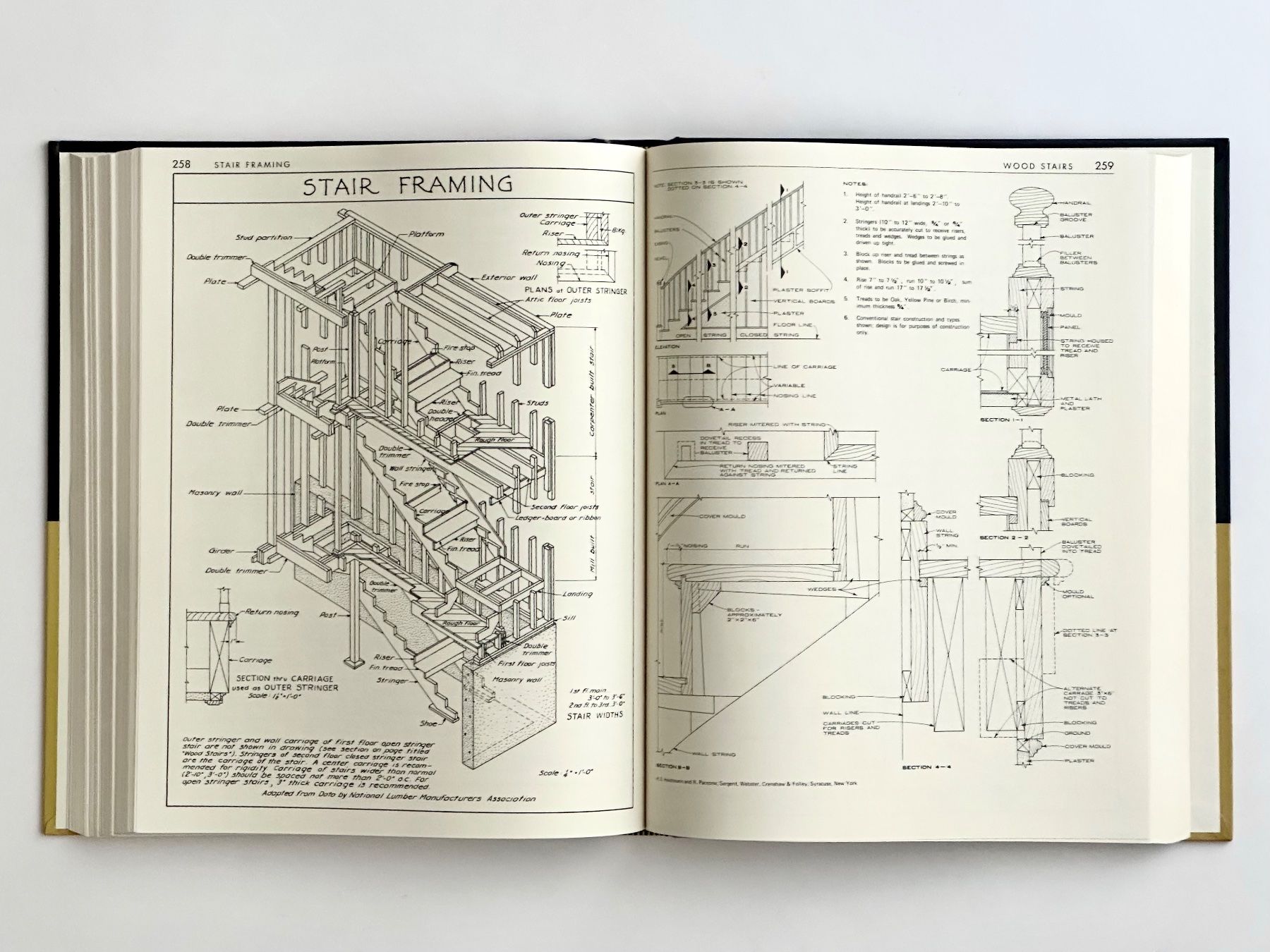
Inhalt: Dieses Werk ist eine Sammlung ausgewählter Seiten aus den klassischen Ausgaben der Architectural Graphic Standards (AGS) zwischen den 1940er- und 1980er-Jahren. Es enthält viele Konstruktionsdetails, die in späteren Ausgaben nicht mehr enthalten sind, und macht sie wieder zugänglich
Behandelte Themen:
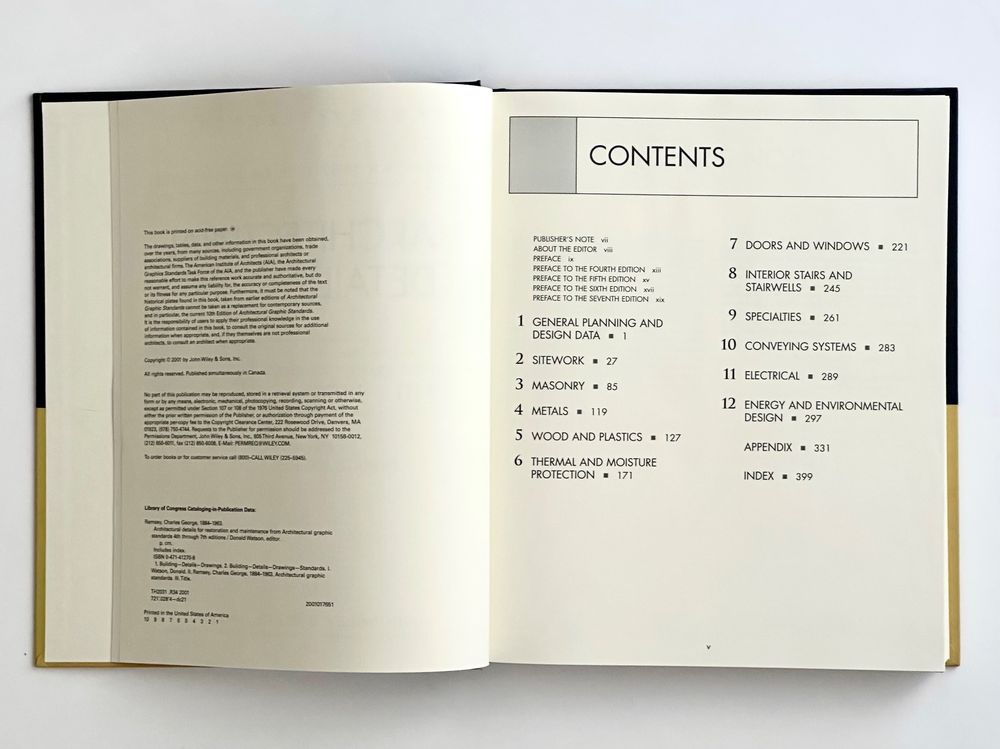
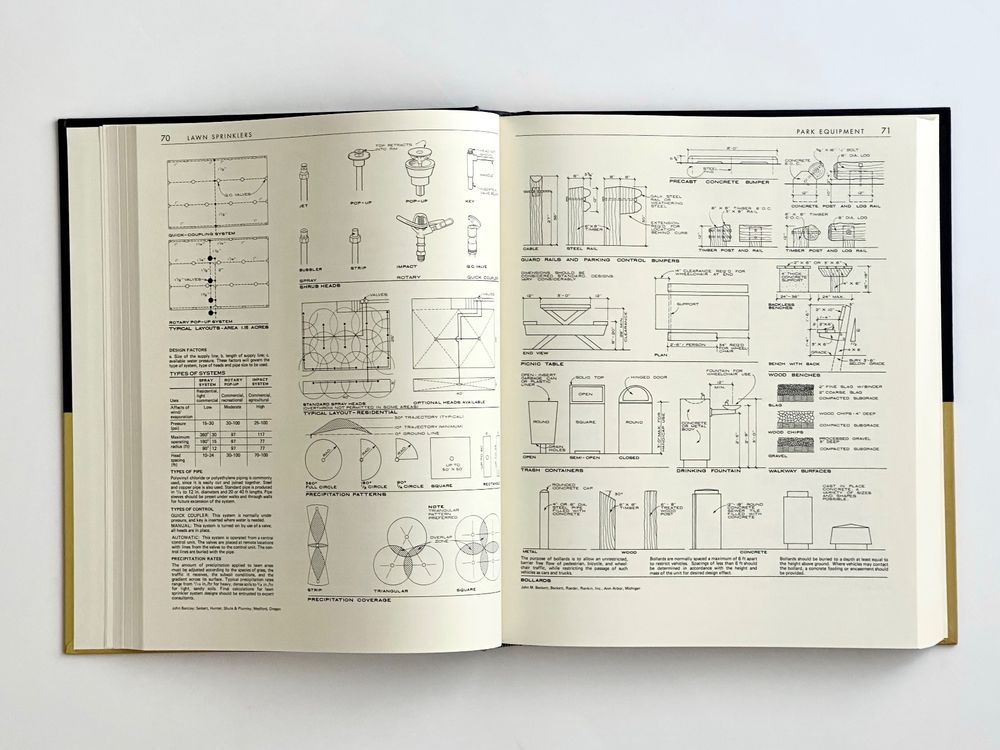
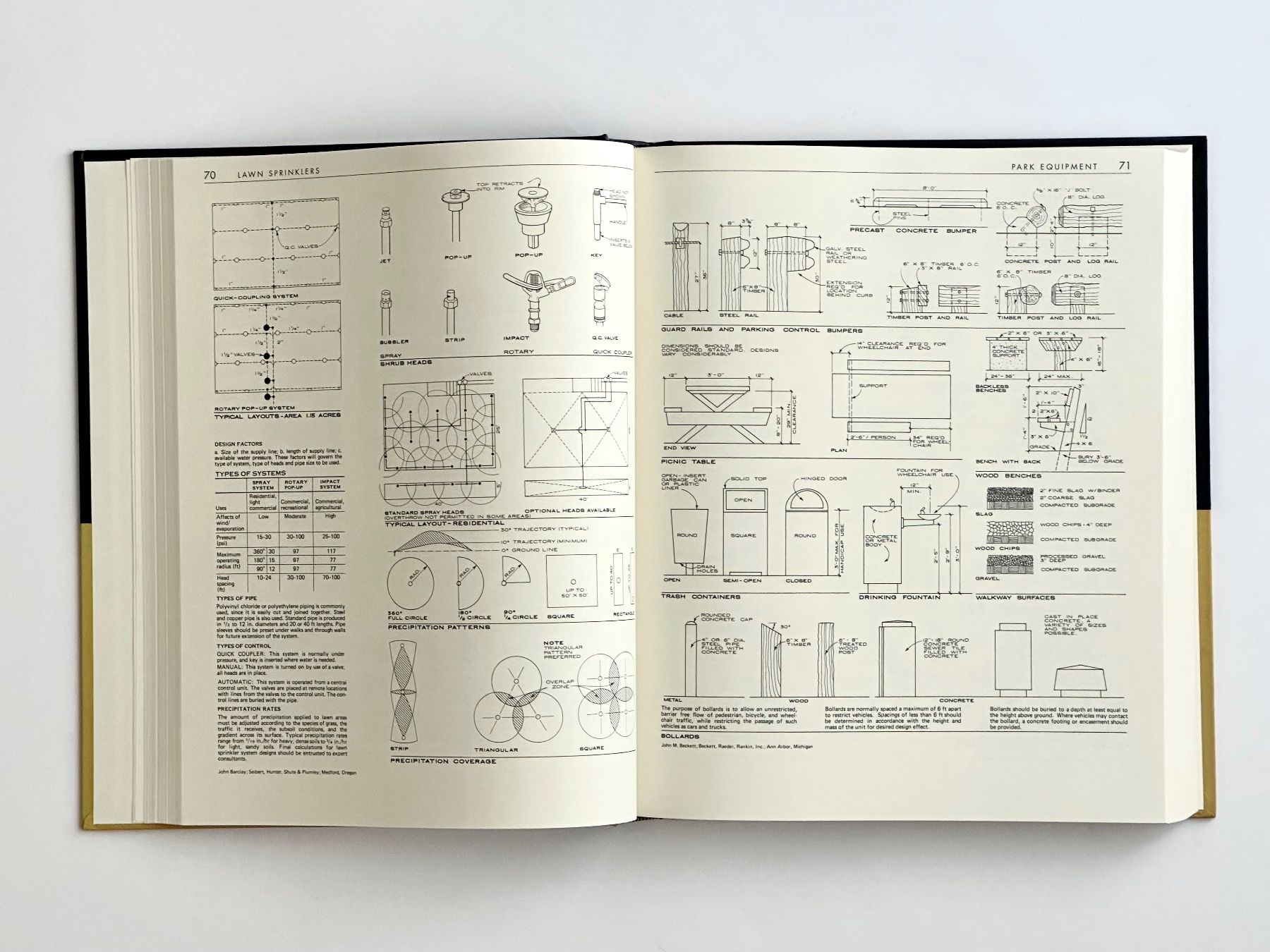
Wohnungsbau, Grundstücksgestaltung, Landschaftsplanung
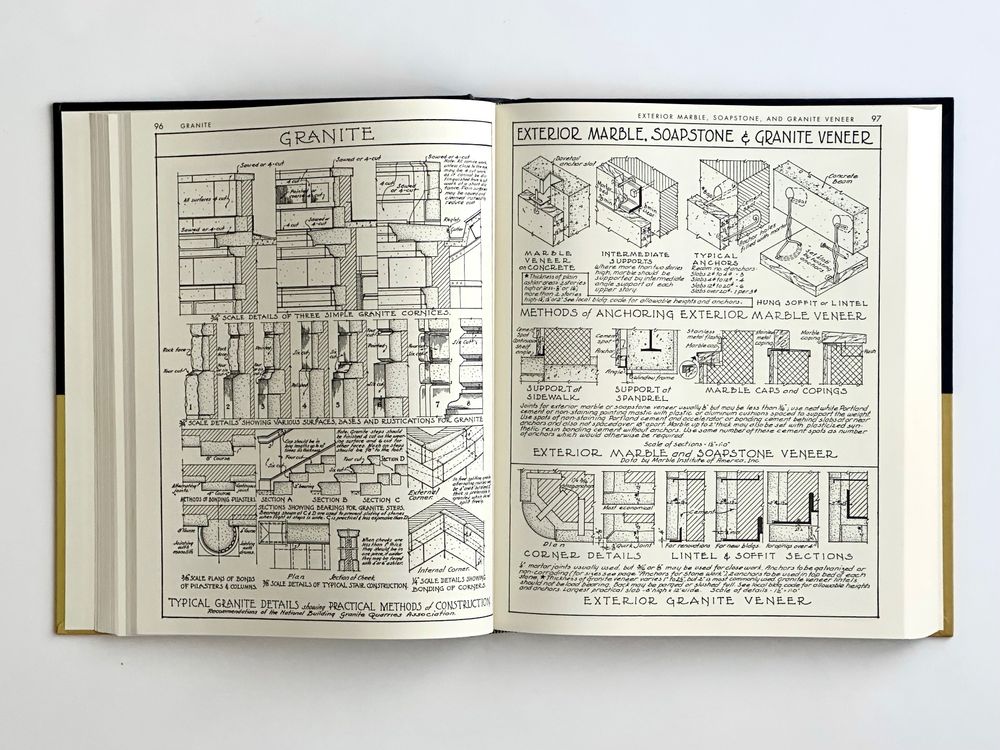
Treppen, Kamine, Naturstein, Terrakotta
Dachsysteme, Holzbau (Mill Construction, Plank-and-Beam)
Frühformen von Energie- und Sonnenschutz
Historische Systeme wie pneumatische Rohrpostanlagen
Besonderheit:
Viele Darstellungen zeigen den Wandel von Details über die Jahrzehnte hinweg.
Description:
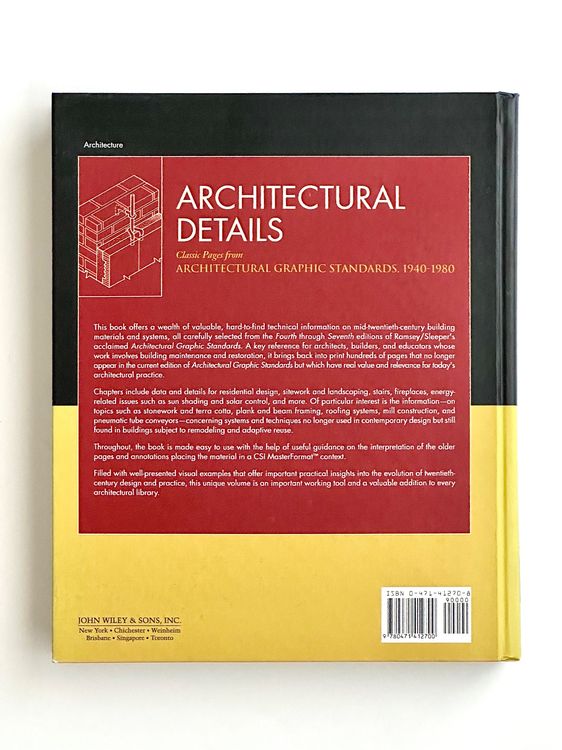
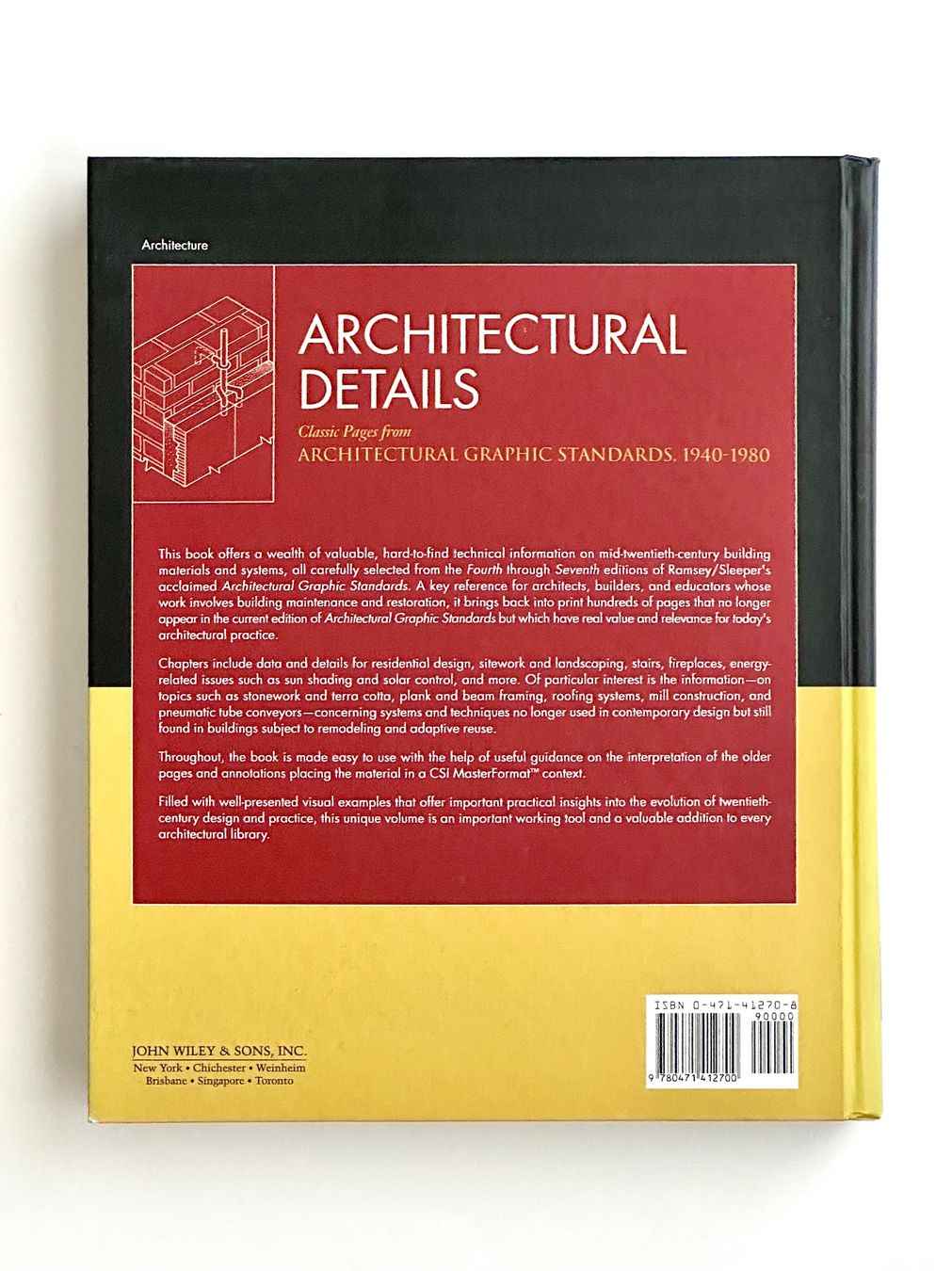
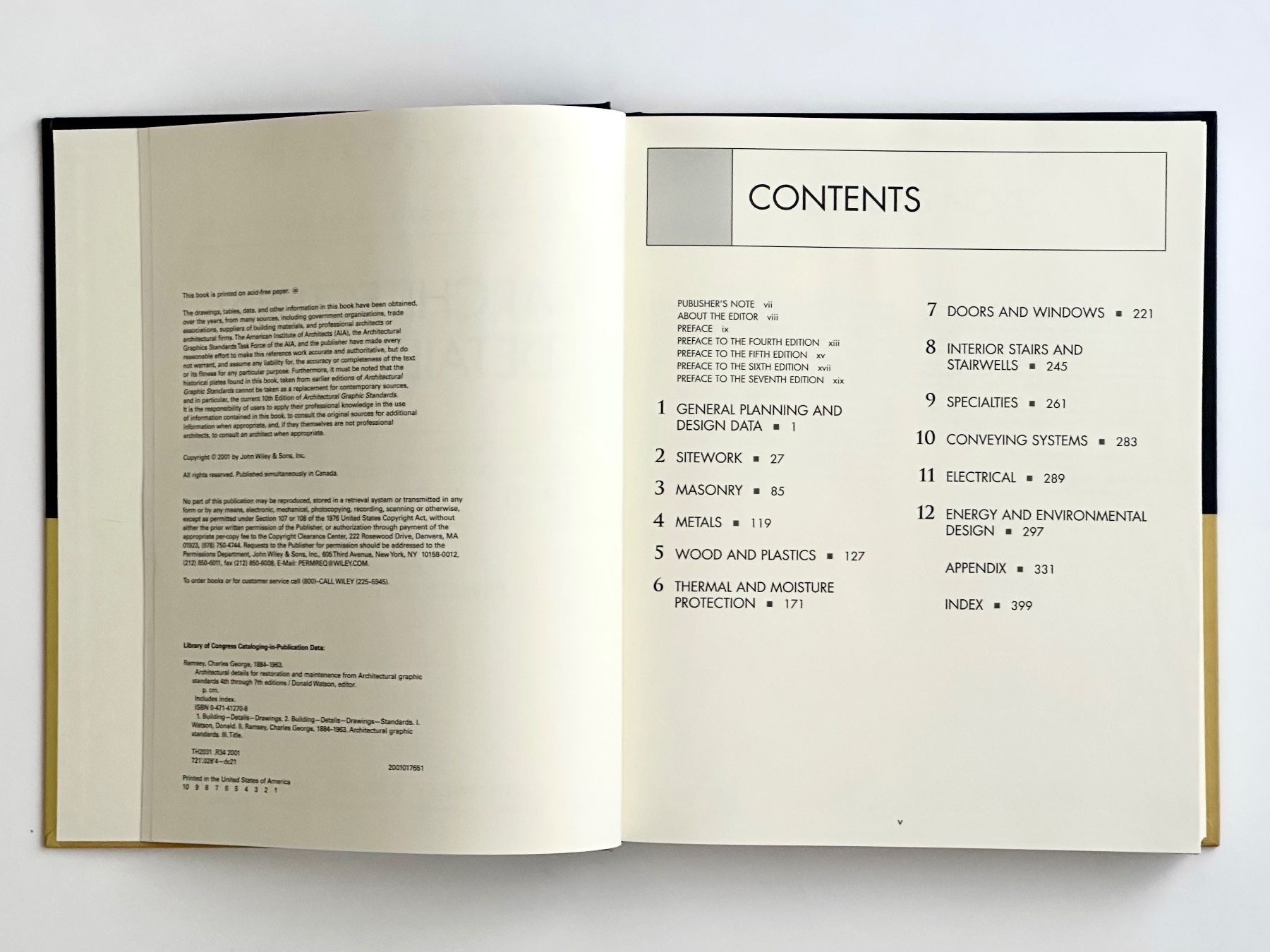
This book offers a wealth of valuable, hard-to-find technical information on mid-twentieth-century building materials and systems, all carefully selected from the Fourth (1951) through Seventh (1981) editions of Ramsey/Sleeper's acclaimed ArchitecturalGraphic Standards. A key reference for architects, builders, and educators whose work involves building maintenance and restoration, it brings back into print hundreds of pages that no longer appear in the current edition of Architectural Graphic Standards but which have real value and relevance for today's architectural practice. Chapters include data and details for residential design, sitework and landscaping, stairs, fireplaces, energy-related issues such as sun shading and solar control, and more. Of particular interest is the information-on topics such as stonework and terra cotta, plank and beam framing, roofing systems, mill construction, and pneumatic tube conveyors-concerning systems and techniques no longer used in contemporary design but still found in buildings subject to remodeling and adaptive reuse.
Throughout, the book is made easy to use with the help of useful guidance on the interpretation of the older pages and annotations placing the material in a CSI MasterFormat(TM) context.
Filled with well-presented visual examples that offer important practical insights into the evolution of twentieth-century design and practice, this unique volume is an important working tool and a valuable addition to every architectural library.