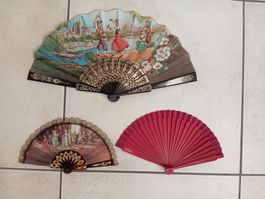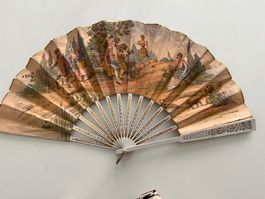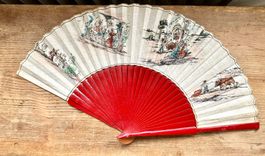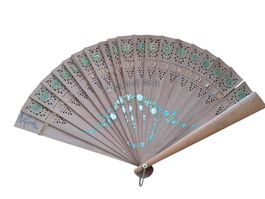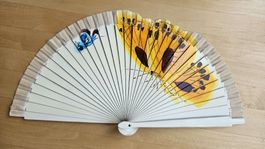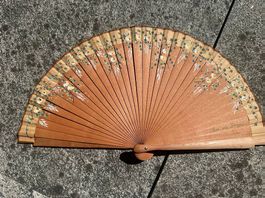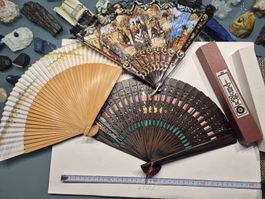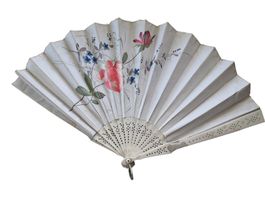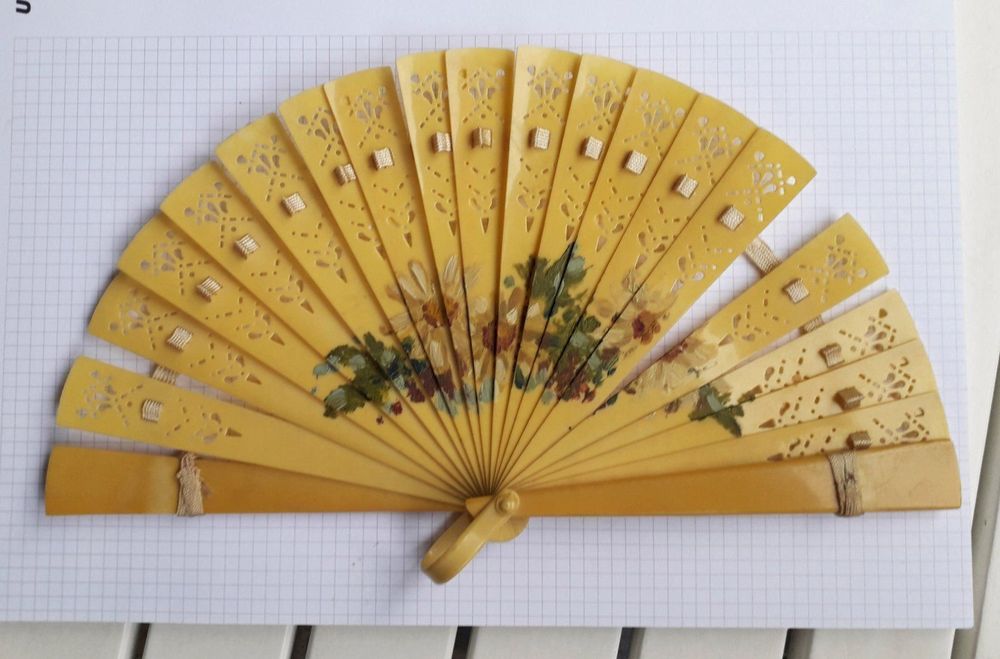
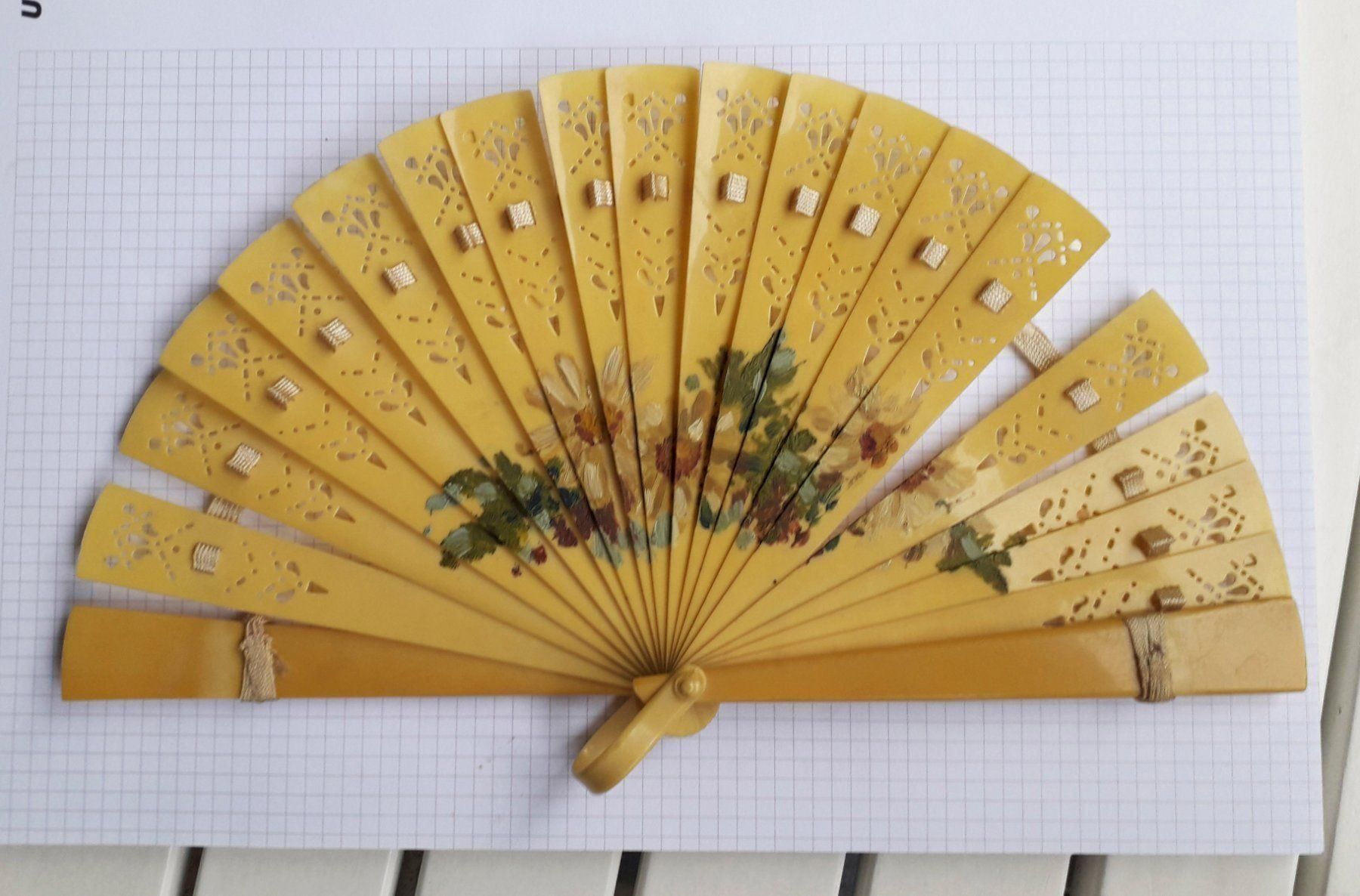
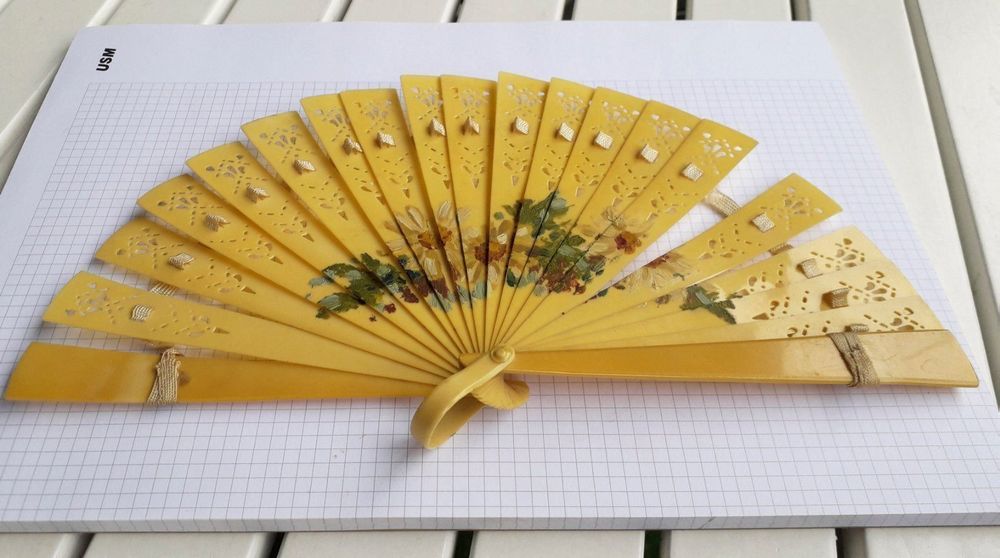
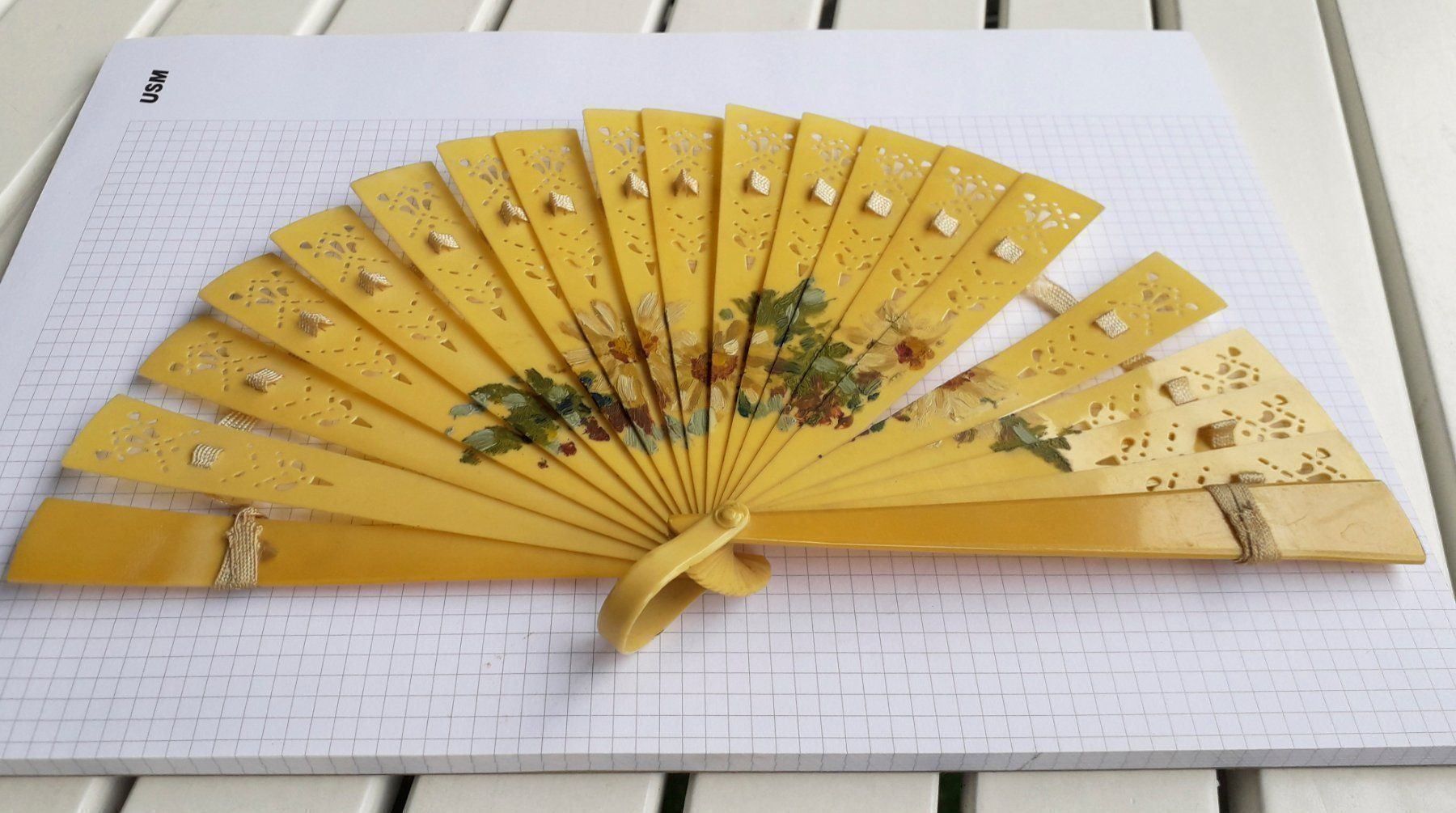
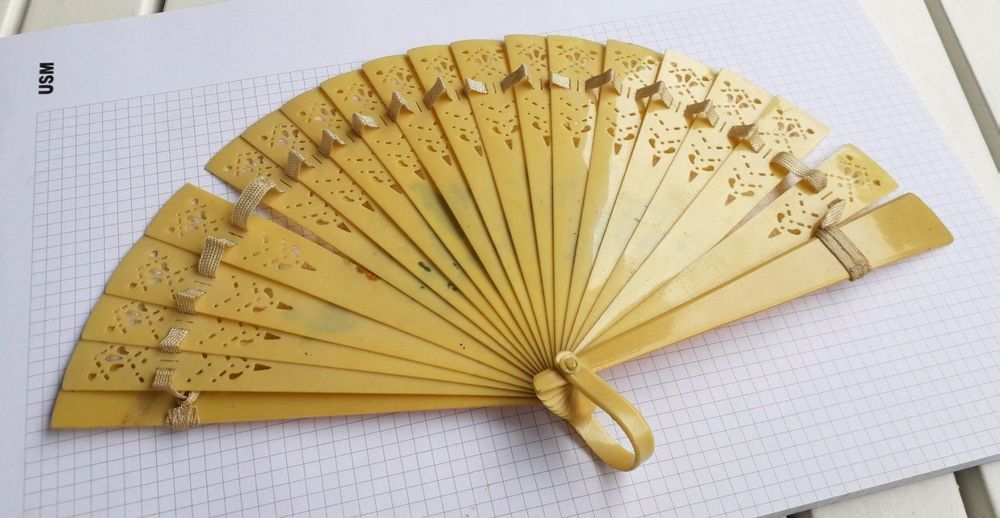
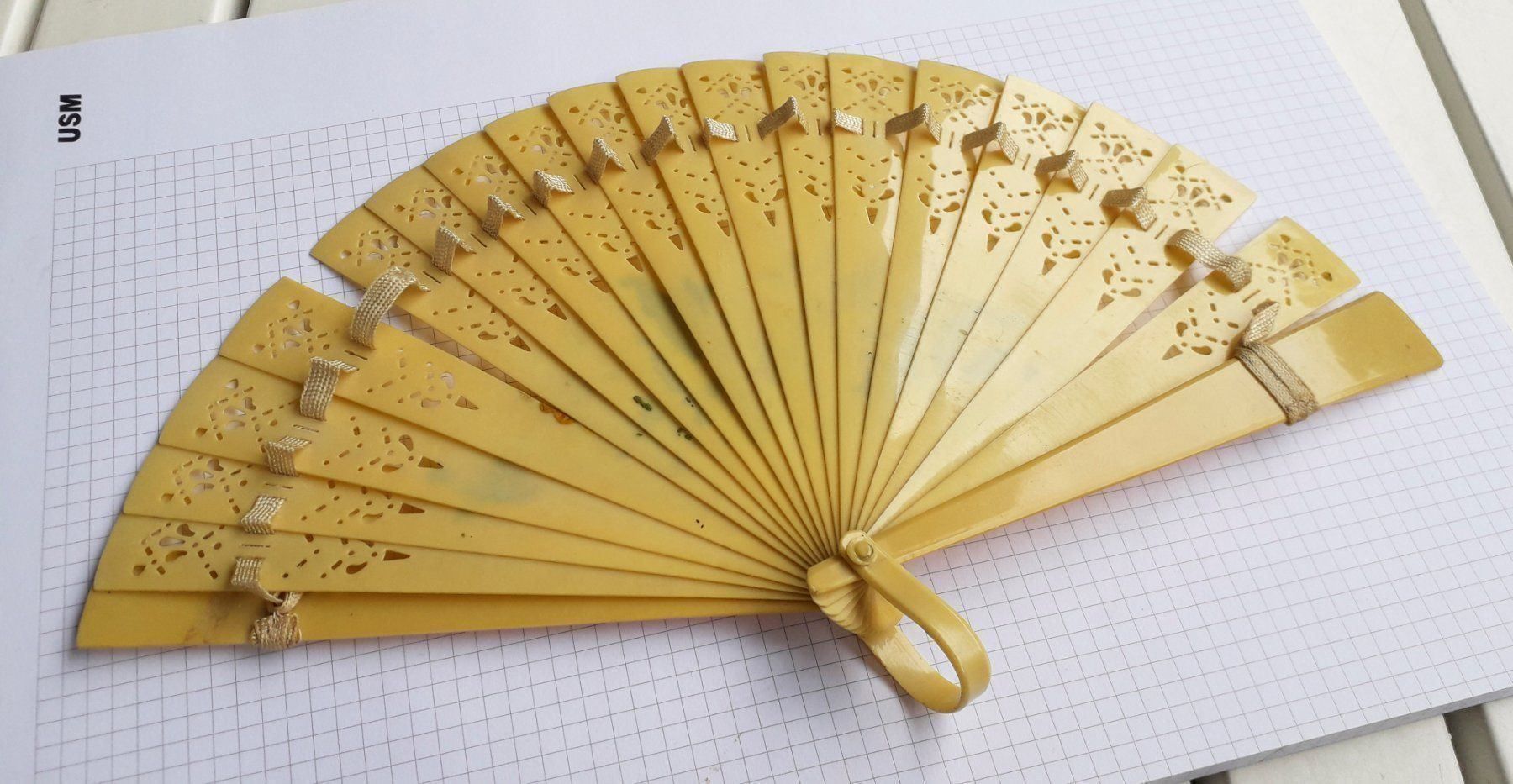
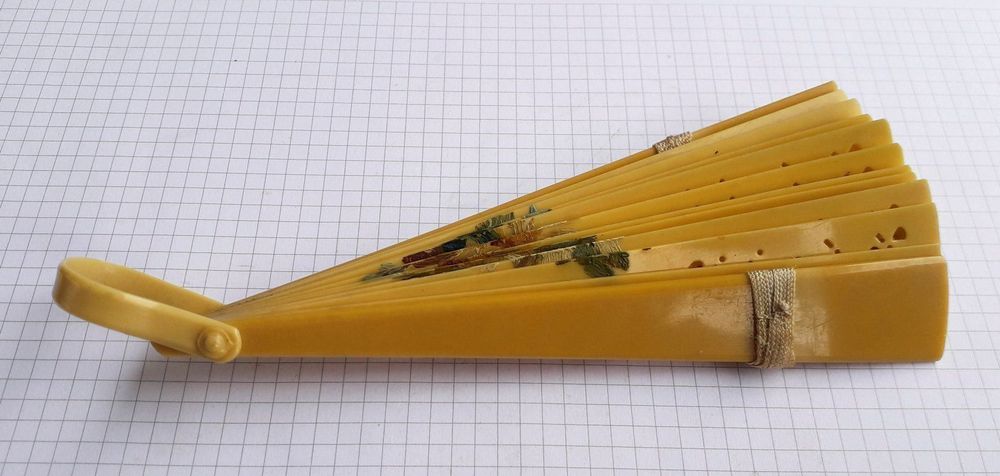
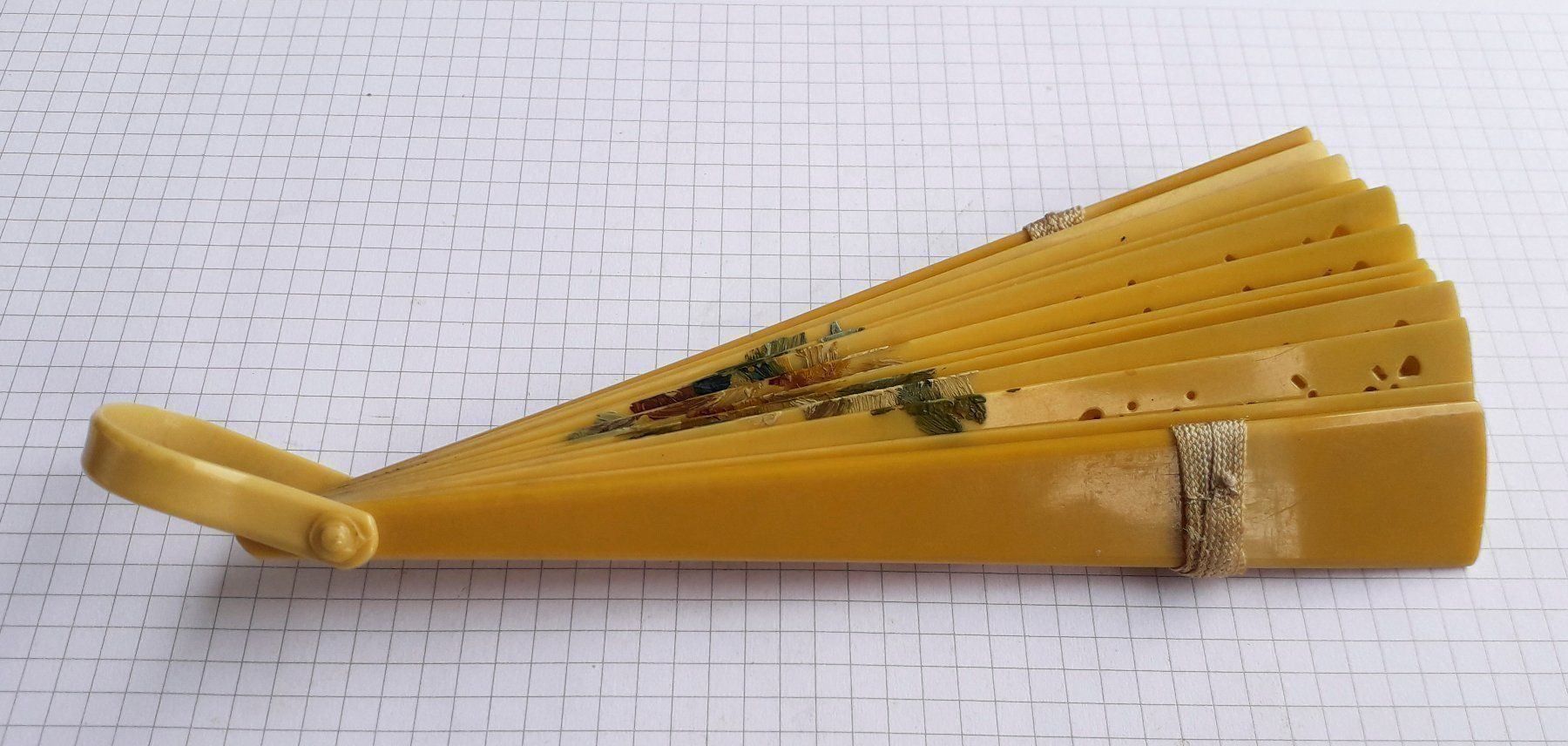
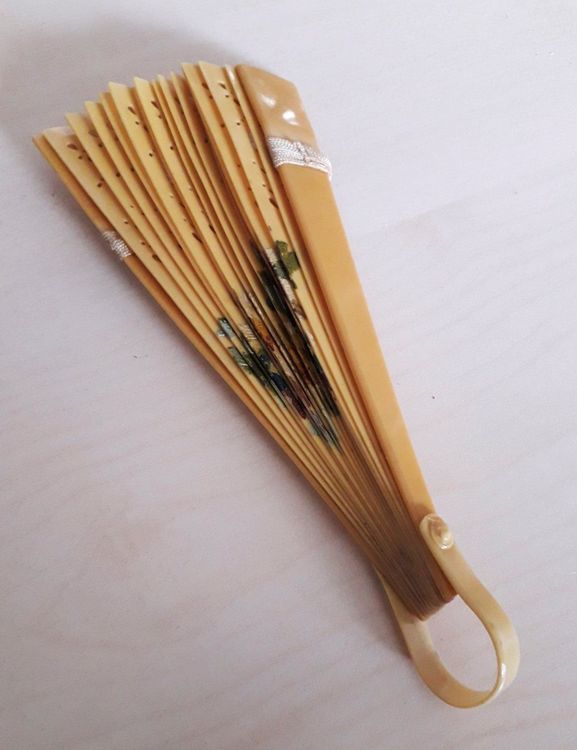
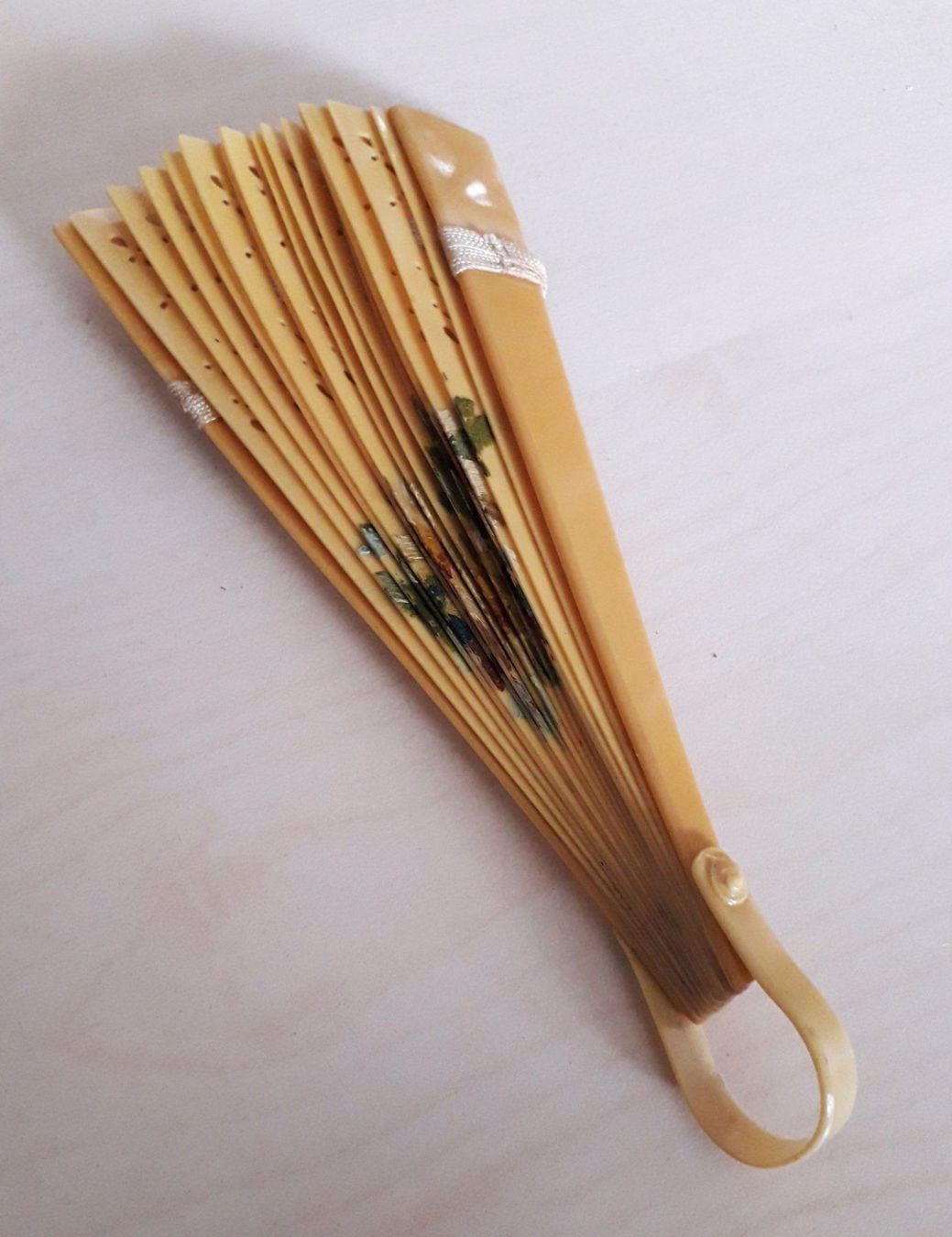
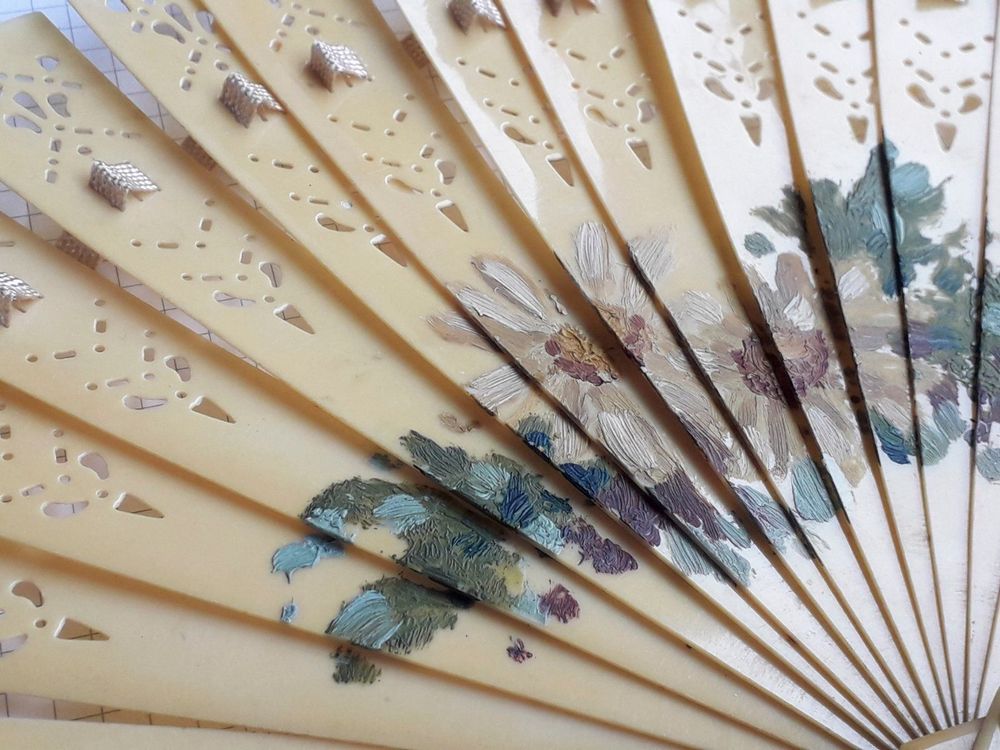
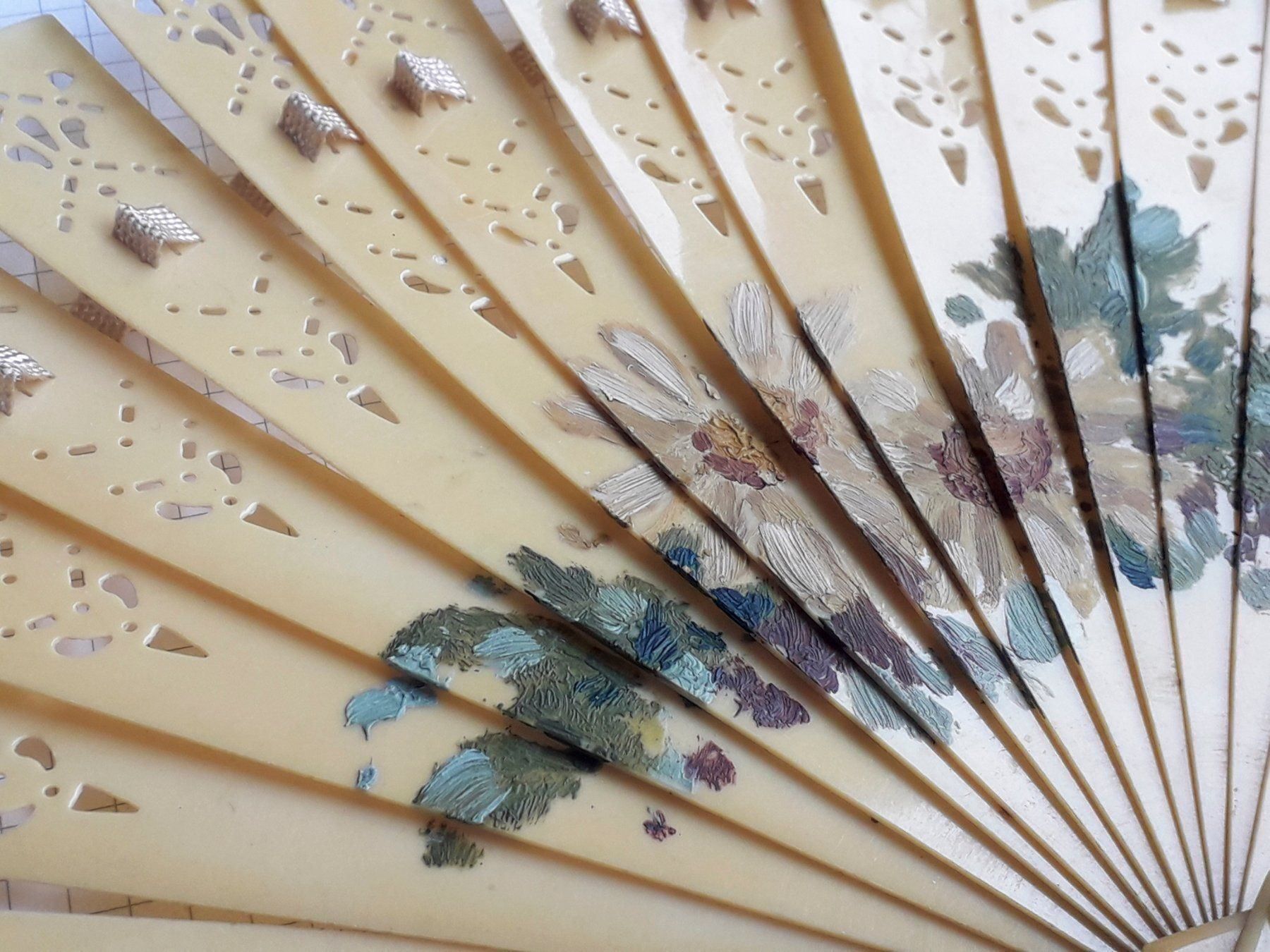
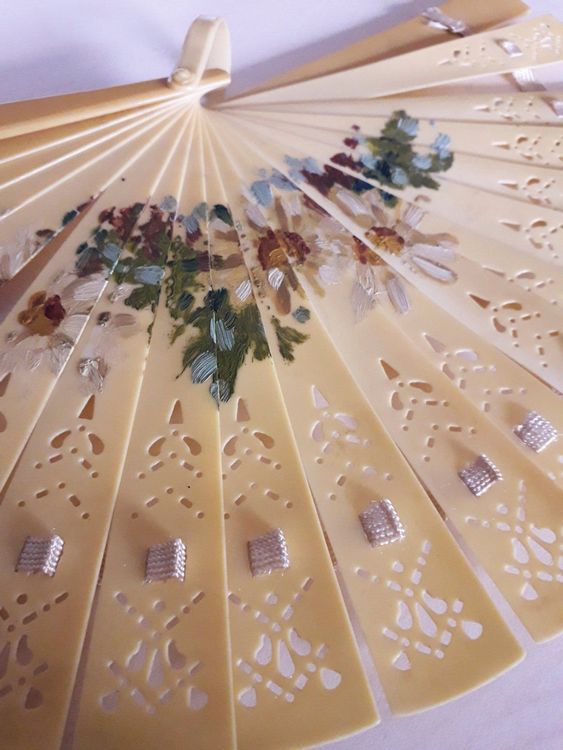
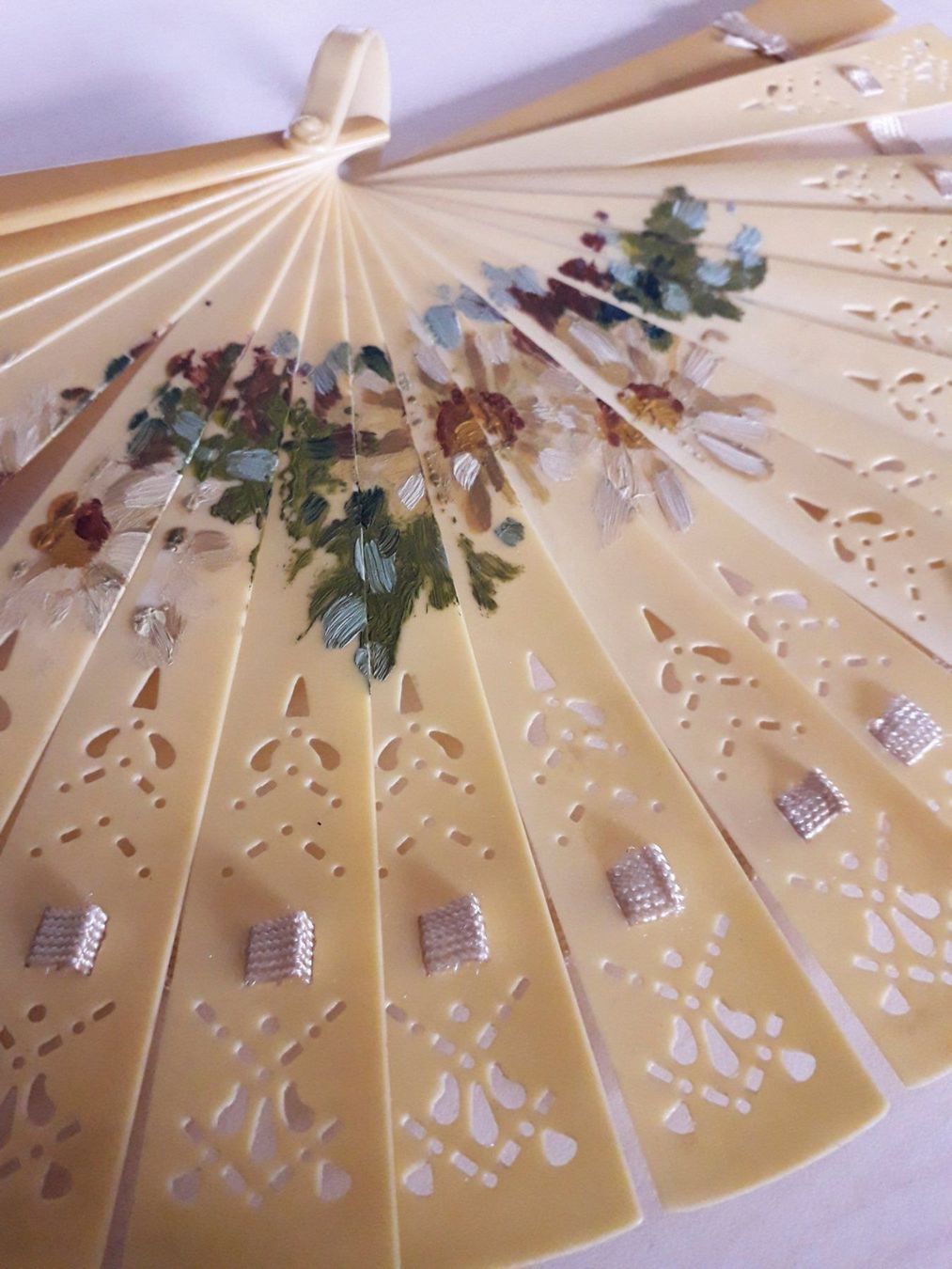
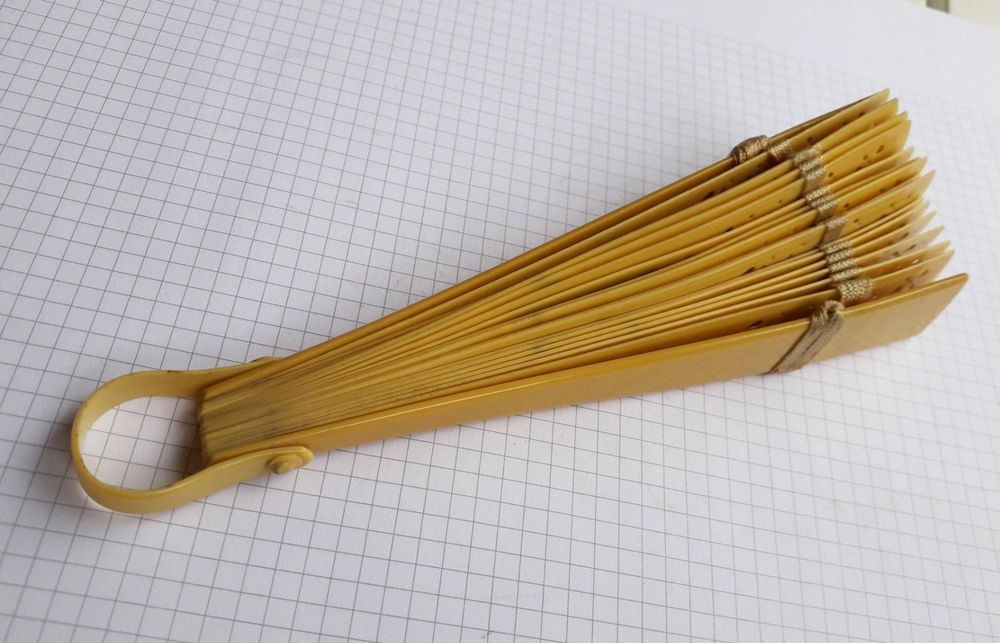
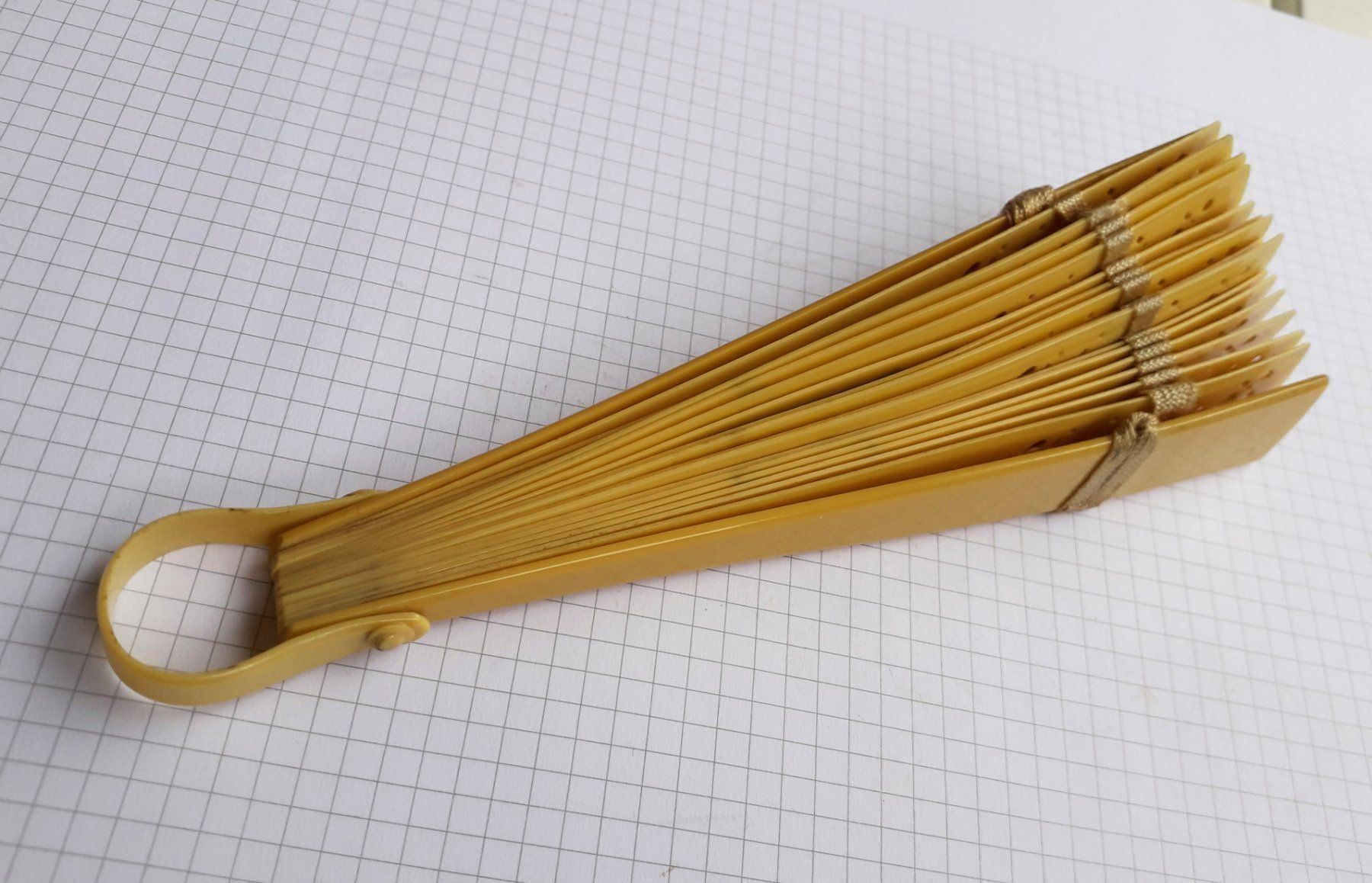

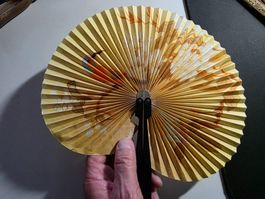
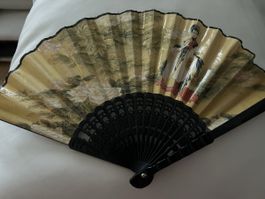
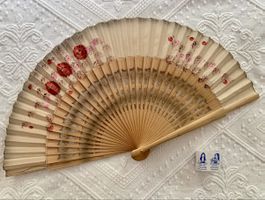
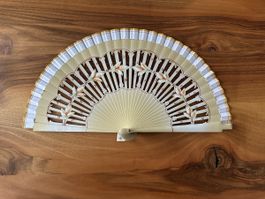
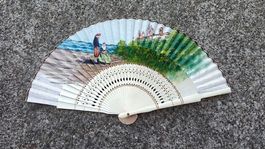
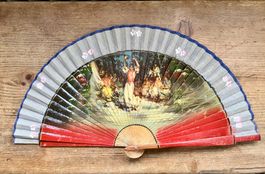
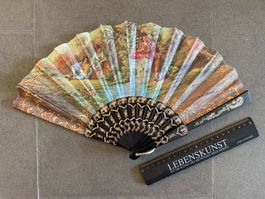
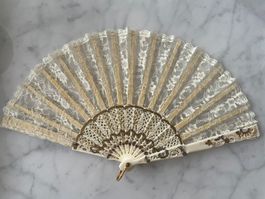
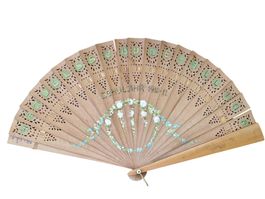
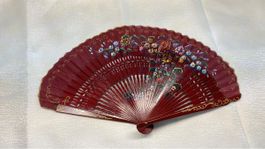
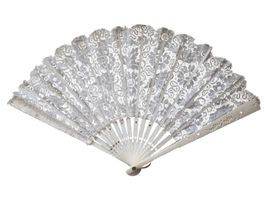
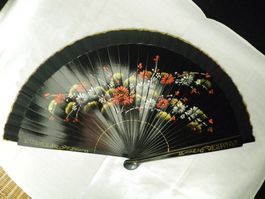
DE - Antiker Zelluloidfächer, dekoriert und bemalt.
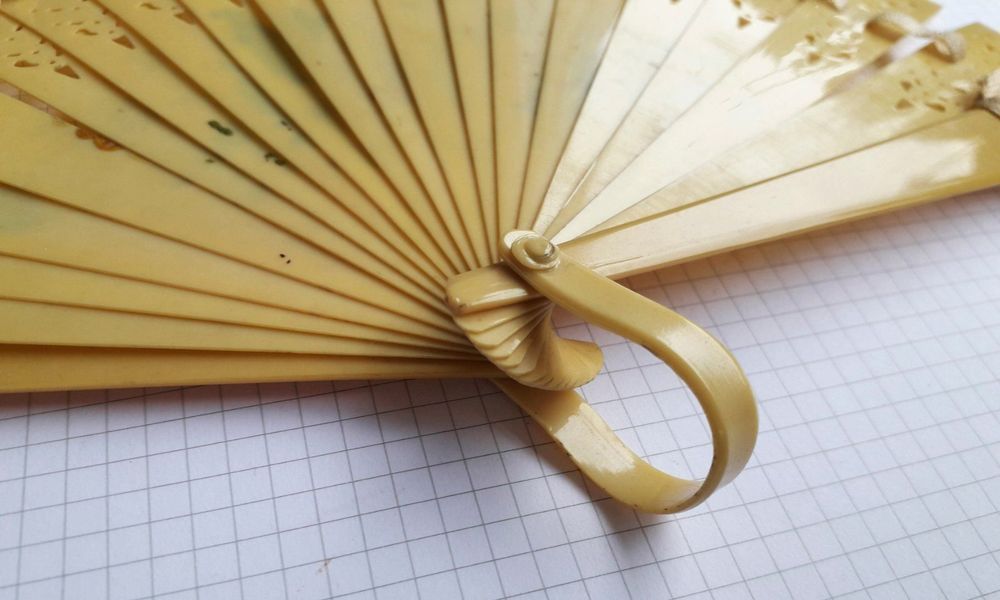
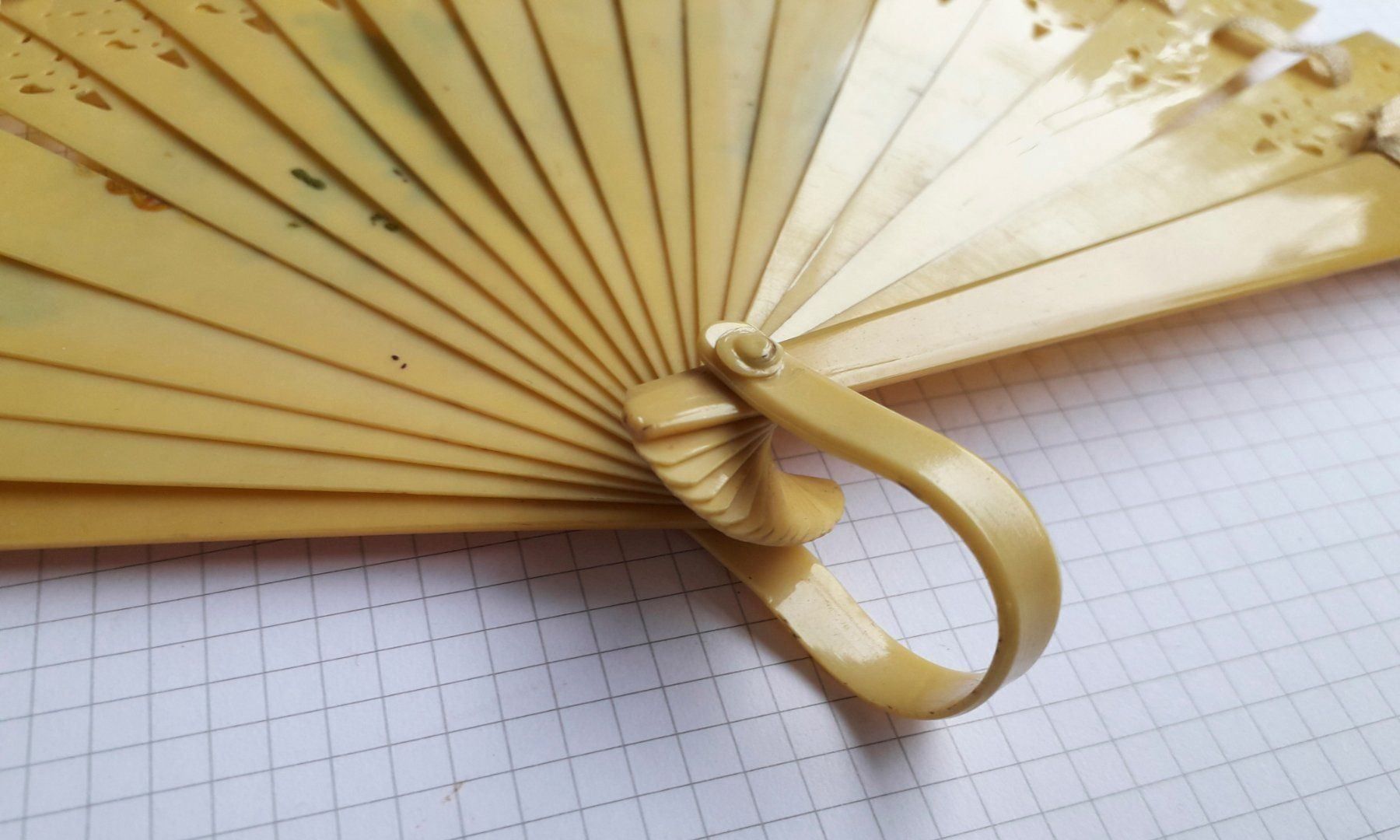
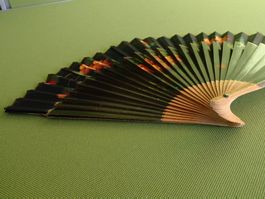
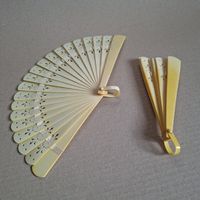
Bitte sehen Sie Fotos. Alle, die es gesehen haben, bestätigen, dass das Material Zelluloid ist, auch weil es die typische Vergilbung des Materials aufweist. Aber ich kann es nicht garantieren.
Sicher ist sie viele Jahre alt, weil sie meiner Großmutter gehörte, als sie jung war (und ich bin 66 Jahre alt).
Abmessungen: geschlossen 16 cm - offen 26x16 cm - Gewicht 32 Gramm
Die verschiedenen Elemente sind durch ein Stoffband wie Seide verbunden.
Celluloid ist der Handelsname für eine Reihe von Kunststoffsubstanzen, die 1868 von John Wesley Hyatt erfunden wurden (Quellen unterscheiden sich) und aus 10-11% Nitrocellulose gewonnen wurden, die mit Kampfer plastifiziert wurde. Obwohl es sich um ein flexibles und feuchtigkeitsbeständiges Material handelt, ist Celluloid extrem entflammbar, und dies hat seine Verwendung stark eingeschränkt. 1887 patentierte der bischöfliche Pastor Hannibal Williston Goodwin seine Verwendung als Träger für fotografische Filme. Es war eine Revolution auf dem Gebiet der Fotografie und ermöglichte die Geburt der Kinematographie.
1909 entdeckte der französische Chemiker Edouard Benedictus versehentlich die Möglichkeit, ihn als Träger zu verwenden, um die Ausbreitung von Glassplittern nach versehentlichem Bruch zu verhindern. Daher die Schaffung von Verbundglas, genannt "Sicherheit".
FR - Eventail ancien en celluloïd, décoré et peint.
S'il vous plaît voir les photos. Tous ceux qui l'ont vu affirment que le matériau est en celluloïd, également parce qu'il présente le jaunissement typique du matériau. Mais je ne peux pas le garantir.
Elle a sûrement plusieurs années parce qu'elle appartenait à ma grand-mère quand elle était jeune (et j'ai 69 ans).
Dimensions: fermé 16 cm - ouvert 26x16 cm - poids 32 grammes
Les différents éléments sont reliés par un ruban de tissu, comme de la soie.
Celluloïd est le nom commercial d'une série de substances plastiques inventées en 1868 (les sources diffèrent) par John Wesley Hyatt et obtenues à partir de 10-11% de nitrocellulose plastifiée avec du camphre. Bien qu'il s'agisse d'un matériau flexible et résistant à l'humidité, le celluloïd est extrêmement inflammable, ce qui a considérablement limité son utilisation. En 1887, le pasteur épiscopal Hannibal Williston Goodwin a breveté son utilisation comme support pour les films photographiques. Ce fut une révolution dans le domaine de la photographie et a rendu possible la naissance de la cinématographie.
En 1909, le chimiste français Edouard Benedictus découvrit accidentellement la possibilité de l'utiliser comme support pour éviter la dispersion d'éclats de verre suite à un bris accidentel. D'où la création du verre feuilleté, appelé «sécurité».
EN - Antique celluloid fan, decorated and painted.
Please see photos. All those who have seen it affirm that the material is celluloid, also because it has the typical yellowing of the material. But I can't guarantee it.
She is certainly many years old because she belonged to my grandmother when she was young (and I am 69 years old).
Dimensions: closed 16 cm - open 26x16 cm - weight 32 grams
The various elements are joined by a fabric ribbon, like silk.
Celluloid is the trade name for a series of plastic substances invented in 1868 (sources differ) by John Wesley Hyatt and obtained from 10-11% nitrocellulose, plasticized with camphor. Although it is a flexible and moisture-resistant material, celluloid is extremely flammable, and this has severely limited its use. In 1887 the Episcopal pastor Hannibal Williston Goodwin patented its use as a support for photographic films. It was a revolution in the field of photography and made possible the birth of cinematography.
In 1909 the French chemist Edouard Benedictus accidentally discovered the possibility of using it as a support to prevent the dispersion of glass splinters following accidental breakage. Hence the creation of laminated glass, called "safety".
IT - Antico ventaglio in celluloide, decorato dipinto.
Per favore vedere foto. Tutti coloro che l'hanno visto affermano che il materiale è celluloide, anche perché presenta l'ingiallimento tipico del materiale. Ma io non posso garantirlo.
Sicuramente ha molti anni perché era di mia nonna da giovane (ed io ne ho 69 anni).
Dimensioni: chiuso cm.16 - aperto cm.26x16 - peso 32 grammi
I vari elementi sono uniti da una fettuccia di stoffa, tipo seta.
Celluloide è il nome commerciale di una serie di sostanze plastiche inventate nel 1868 (le fonti sono discordanti) da John Wesley Hyatt e ottenute da nitrocellulosa al 10-11% di azoto, plastificata con canfora. Pur trattandosi di un materiale flessibile e resistente all'umidità, la celluloide è estremamente infiammabile, e ciò ne ha limitato fortemente l'impiego.



)