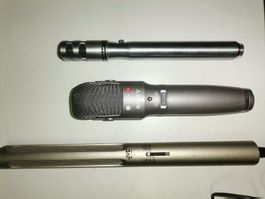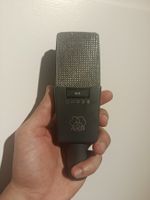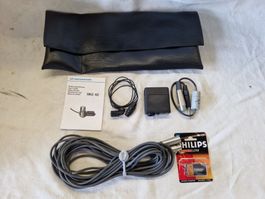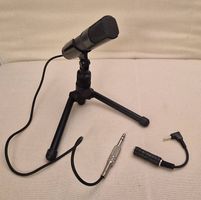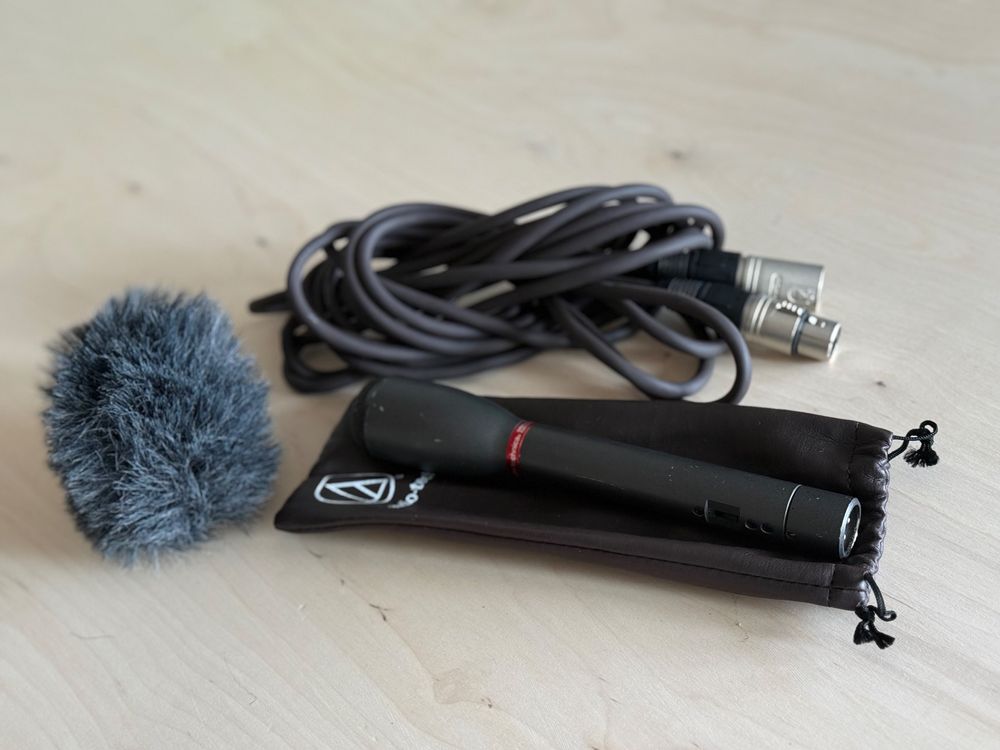
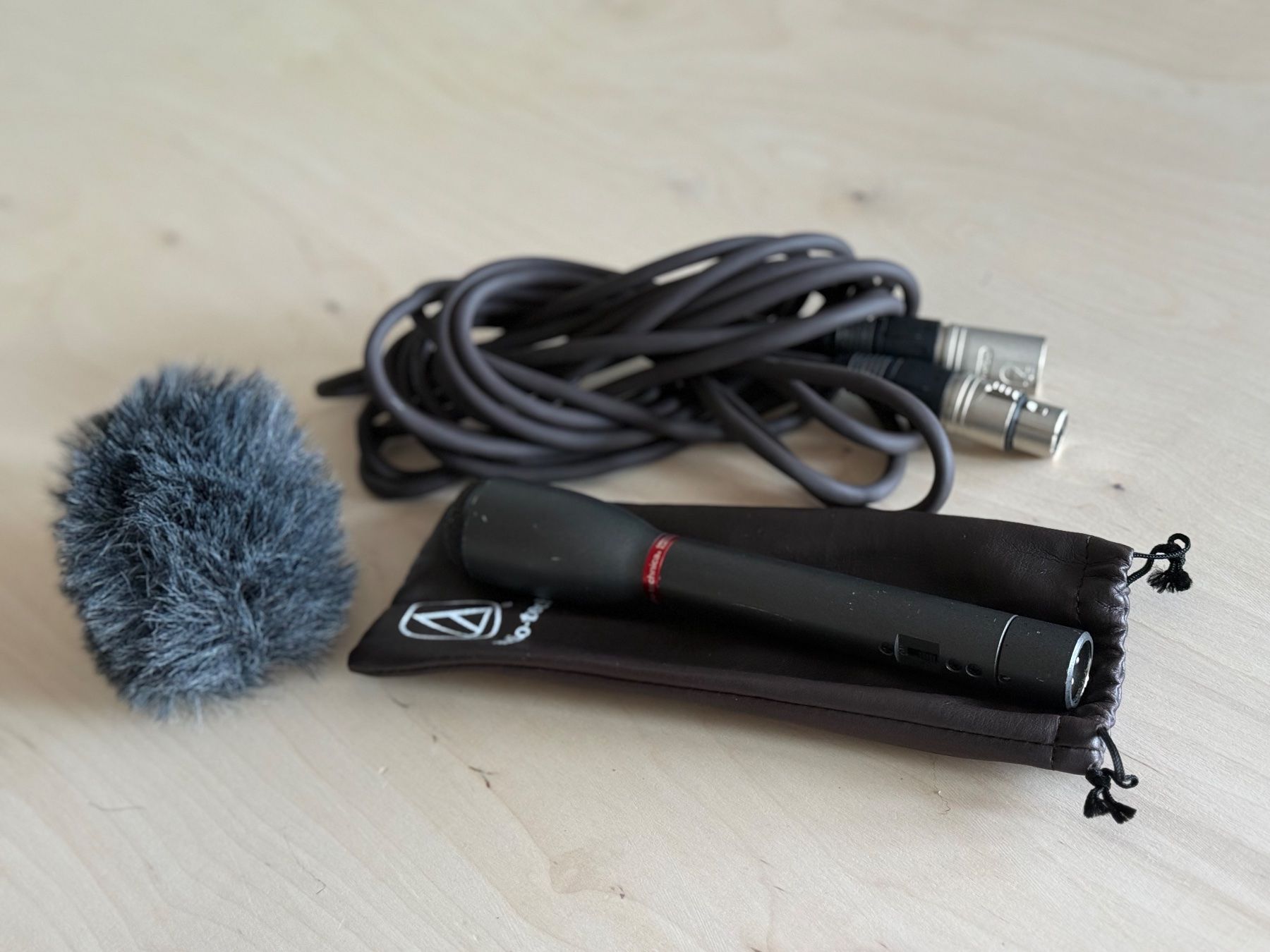
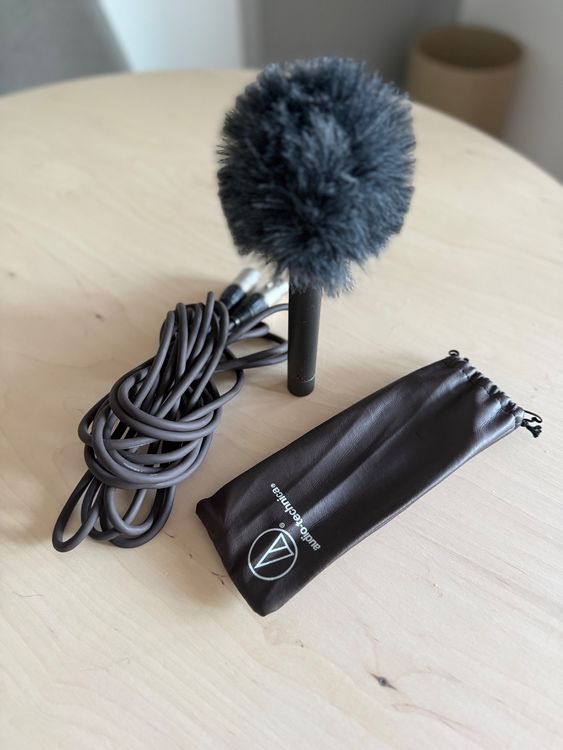
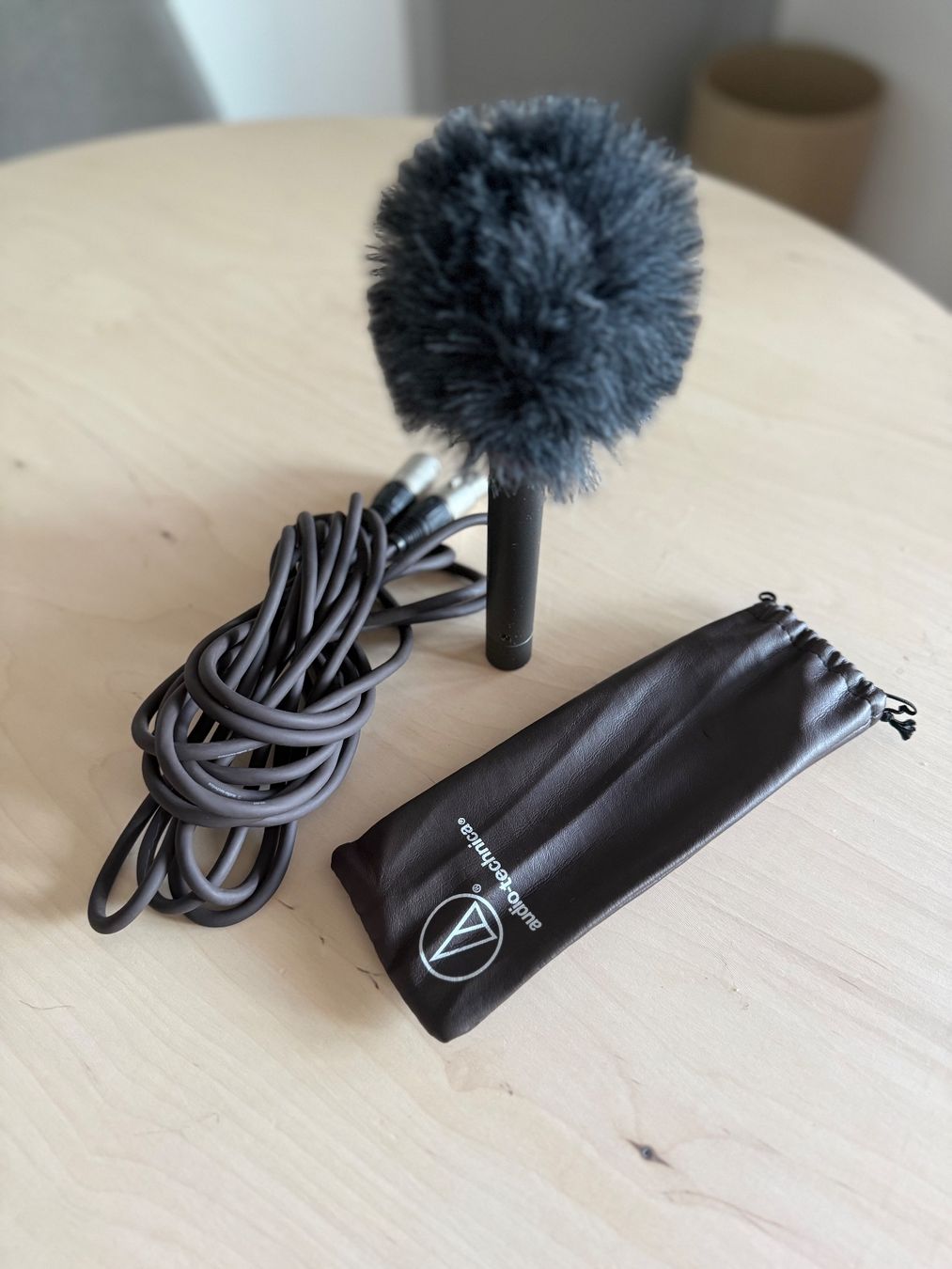
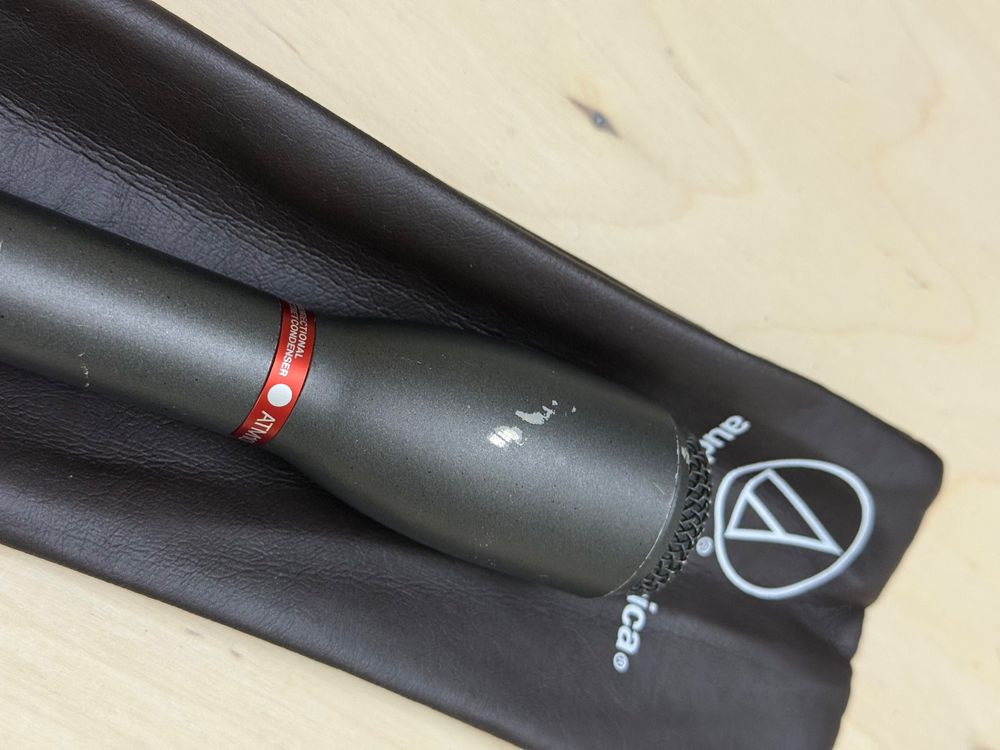
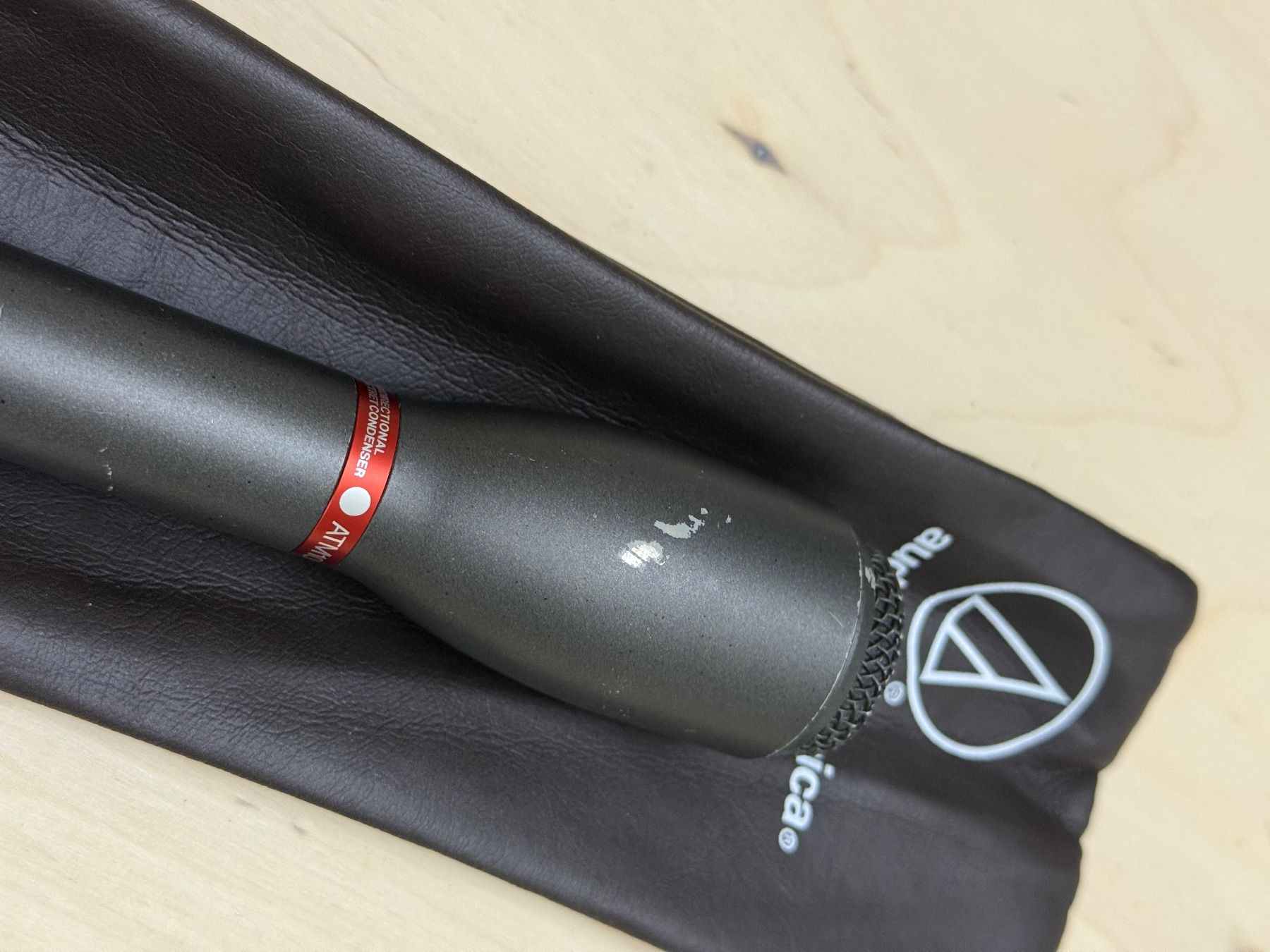
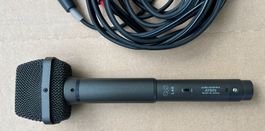
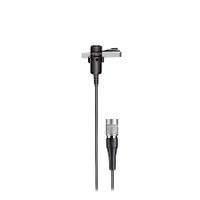
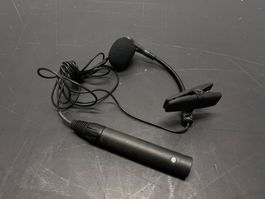
The ATM 10 is an omnidirectional (equally sensitive to sounds from all directions) 'electret' condenser microphone, which utilises the fixed charge back-plate method of construction that has enabled the performance of modern electrets to genuinely rival that of conventional condenser systems. The obligatory, on-board, impedance matching preamp is powered by an internal 1.5V AA size battery, but the current drain of the FET design is so low that battery life is specified at an impressive 5000 hours!
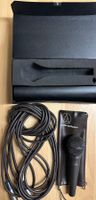
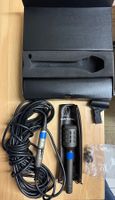
The microphone's slim and elegantly shaped housing, which widens towards the head, is capped with a lightweight wire mesh grill. It has an on/off switch located at the base of the shaft, with the attractive appearance being completed by a low-reflectance metallic finish. The output is low impedance (described as "600 ohms nominal, matches 150 to 1kOhm inputs"), and balanced, with the integral three-pin male XLR connector providing compatible phasing via the accepted, pin 2 'hot', pin configuration.
An omnidirectional microphone, being purely a 'pressure transducer' (as opposed to the 'pressure-gradient' principle from which directionality is derived), presents fewer problems and requires less design compromise than an equivalent cardioid model, where the tuned ports necessary to achieve the directional characteristic can result in phase and frequency response deviations, causing an audible effect known as 'cardioid colouration'. Although this will not be evident from the specifications, it can be plainly demonstrated in a side by side comparison of similar quality cardioid and omnidirectional models, where the omni will invariably sound more open, transparent and natural.
The ATM 10 has a nominal frequency range of 40Hz to 18kHz, with a gentle bass roll-off over the last octave (40Hz - 80Hz) that effectively avoids rumble and other low frequency (LF) problems without losing any significant musical information. A gently rising response above 2kHz, also makes for enhanced clarity and presence. Proximity effect is completely absent in this type of mic, so the bass response remains constant, regardless of the working distance. However, the ATM 10 does exhibit a degree of directionality, with off-axis pick-up proving less sensitive to high frequencies, but this is to some extent a feature of all omnis, being due to the shadowing effect of the housing, which is, in practice, unavoidable.
Applications
The modern, multitrack recording technique, involving repeated overdubbing, encourages the use of omnidirectional mics, for with only one instrument usually being recorded at a time, directional discrimination is not needed in order to achieve separation of sounds. The subjectively 'cleaner' sound of an omni can therefore be used to good effect with virtually any instrument, with the distance between the mic and the source used to control the amount of 'acoustic' (room ambience) to be included in the sound.
For overdubbing lead guitar tracks, especially heavy rock solos, I find that the use of an omni, placed at some distance from the guitar amp/speaker in a good room, is the most effective way of conveying the sense of 'loudness' needed to complement the musical style. It is interesting to note how a track that contains a degree of natural ambience will always seem to sound bigger and louder in a mix than a 'dry' track, presumably due to the presence of psychoacoustic 'clues' that in some way help the brain to establish the true scale of a sound source.
Although many early electrets had severely restricted dynamic capabilities, the ATM 10 is specified as able to handle up to 125dB SPL, and certainly displayed no problems with loud amplifiers or instruments, even at close range.
Backing vocals, using a number of singers, are often more easily recorded by grouping the performers around a single omnidirectional microphone, using distance for balancing the blend of voices. It seems to produce a more natural blend of voices which require less compression, with the added advantage of reducing the possibility of an individual singer going seriously off-mike.
The smooth, open sound of the ATM 10 is well suited to any vocal or instrumental source which requires a 'natural' recorded sound, with mic placement often proving much simpler than when working with a cardioid, provided that the slight HF beaming is properly taken into account. In recording tests, brass, reed and wind instruments were all reproduced well, with notably fewer problems arising from level differences between upper and lower registers, than when directional mics are used with these types of instruments.




)